Learning about cars: the ‘B’ segment

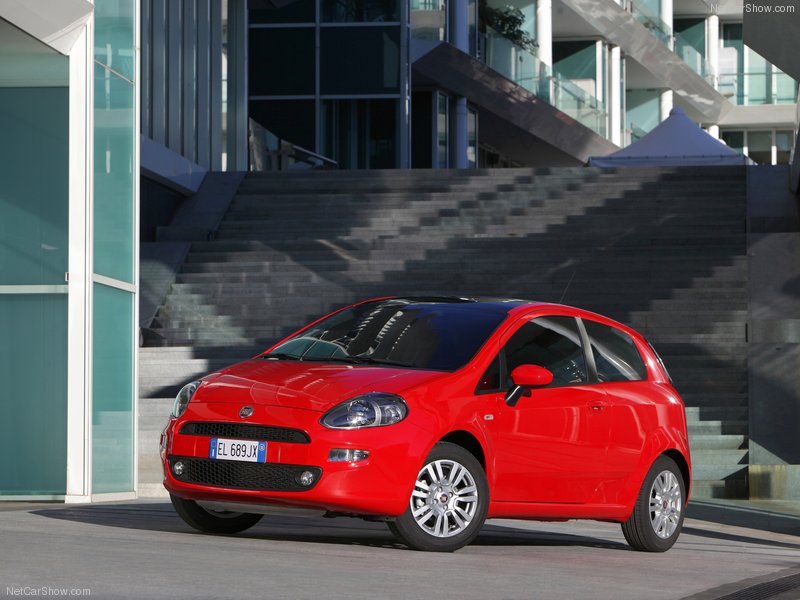
Fiat Punto, Italy's 'B' segment best seller. Photo by netcarshow.com

Fiat Punto, Italy’s ‘B’ segment best seller. Photo by netcarshow.com

Small cars are popular but when they have better roominess, are a bit more practical and keep being compact, then they become one of world’s most popular segment, the ‘B’. Is the next step after mini cars and they focus on several kind of customers: from better paid single people to begining families. More or less most of car manufacturers offer a model in this segment which is popular in some countries while not really loved in some other important ones. This kind of small cars was born in Europe after Oil crisis in early 70’s, when Europeans realized they could not afford anymore high oil prices and therefore they needed smaller and efficient cars. Today they can be found everywhere and are especially popular not only in Europe, where they have a 25% of market share, but also in Latin America (with 38%), India (36%) and Russia (55%). But they are pretty unpopular in the US (together with ‘A’ segment they represent 4%) and China (15%).

The new Fiat Siena launched in March/12 in Brazil. One of 'B' segment best seller sedans

The new Fiat Siena launched in March/12 in Brazil. One of ‘B’ segment best seller sedans

The cars classified in this segment are the ones with length from 3.7 m up to 4.15/4.2 m. It all depends on the market and body type, because some car makers offer sedan version of hatchback ones and then they get more centimeters to their final measure. In other cases, the same car is differently positionate according to the market: Fiat Linea (sold as B segment in India and Europe, while C segment in Brazil), or Honda City (B segment in China and India but C segment in Brazil). Besides, there are some subsegments according to the cost of the vehicle: the low cost ones such as Dacia, Lada and some Indians; medium ones, most of all; and high level ones such as Audi A1, Alfa MiTo, Citroen DS3 and Mini Cooper. Here is the list:

EUROPE

  • Alfa MiTo
  • Audi A1
  • Chevrolet Aveo
  • Citroen C3/DS3
  • Dacia Sandero/Logan
  • Daihatsu Sirion/Materia
  • Fiat Punto/Linea (Linea, ‘C’ segment in Turkey)
  • Ford Fiesta
  • Honda CR-Z/City (City, ‘C’ segment in Turkey)
  • Hyundai i20/Accent/Solaris
  • Kia Rio
  • Lada Kalina/Samara/Priora/Granta
  • Lancia Ypsilon
  • Mazda 2
  • Mini Cooper
  • Nissan Micra
  • Opel Corsa
  • Perodua Myvi (only in the UK)
  • Peugeot 206/207
  • Proton Savvy/Satria (in the UK)
  • Renault Clio/Zoe
  • Seat Ibiza
  • Skoda Fabia
  • Subaru Justy
  • Suzuki Swift
  • Toyota Yaris
  • VW Polo/Beetle

AUSTRALIASIA

  • Chery Cowin 1
  • Chevrolet Sail/Lova
  • FAW Xiali (China)
  • Ford Figo (India)
  • Great Wall Voleex
  • Haima 2 (China)
  • Hindustan Ambassador (India)
  • Holden Barina (Australia)
  • Hyundai Getz
  • JAC J3
  • Lifan 320 (China)
  • Mahindra Verito (India)
  • Maruti D-Zire (India)
  • MG3 (China)
  • Skoda Rapid (India)
  • Tata Indica/Indigo/Vista/Manza (India)
  • Toyota Rukus (Australia)/Vios (South East Asia and China)
  • Toyota Etios/Livia (India)
  • VW Polo/Vento (India)

LATINAMERICA

  • Chevroler Corsa/Agile/Cobalt
  • Fiat Palio/Siena
  • Renault Symbol (also in Turkey)
  • VW Gol/Voyage/Parati


Click here to see ‘C-Passenger’ Segment

Click here to see ‘A-Passenger’ Segment


*Data source: FGW data base
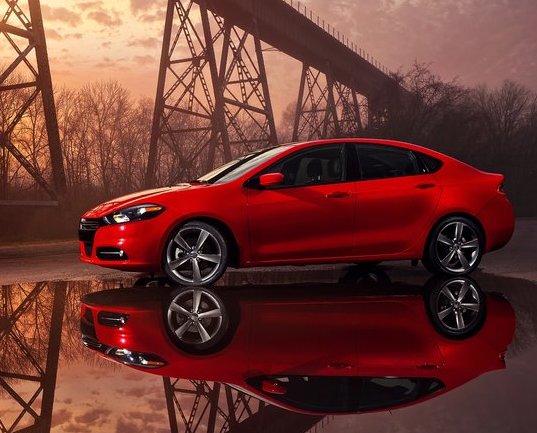
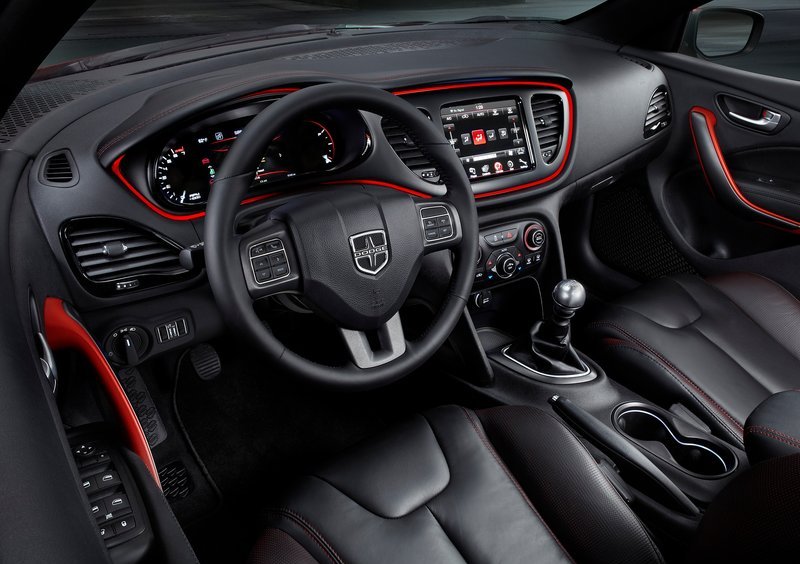
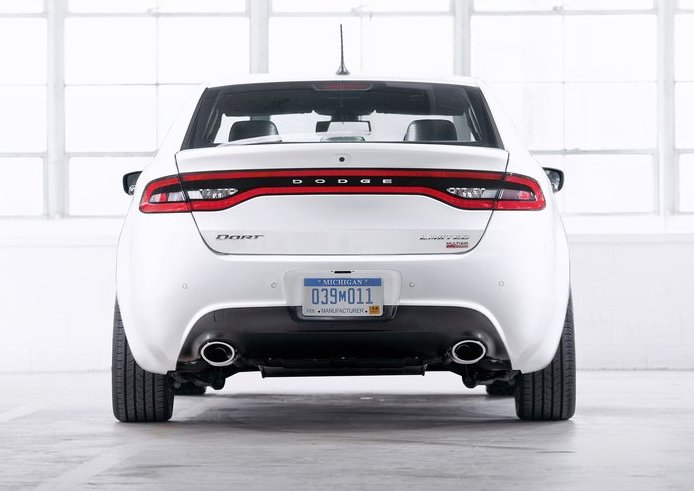
Full production starts for the Dodge Dart

The all new Dodge Dart. Photo by netcarshow.com

The all new Dodge Dart. Photo by netcarshow.com

On monday May 7th, Belvidere Plant in Illinois began full production of the all new Dodge Dart. The pretty C segment sedan will be available in showrooms from june this year and it is expected to be a success as it certainly offers a great mix of nice exterior design, high quality interiors, and great engines developed with Fiat. “We are probably bulding the best product not just in the country but in the world” for Dodge, said George Welitschinsky, president UAW Belvidere Assembly Plant. Customers will have a choice of 12 exterior colours, 14 interior colours, 3 fuel efficient engines, 3 transmission choices, and world class aerodynamics starting at US$16.000, just below its main competitors: Chevrolet Cruze, Ford Focus and Toyota Corolla.

Photo by netcarshow.com

Photo by netcarshow.com

The Dart is a product that was born after Fiat’s take over Chrysler in early 2009. By that time, economic crisis made American Government to search for solutions to the bankrupted automotive sector. Dart is the answer to one of main conditions for this take over: to produce a small fuel efficient car (26 MPG city/41 highway) in America. Fiat brought its fuel efficiency technology to Chrysler and then they added Alfa Romeo’s C-EVO platform to get this beauty mid size sedan that will serve as the base for Fiat Viaggio in China. Those characteristics plus the fact that C segment is becoming really popular in the US market (third largest one with 16% market share, after SUV and D segment*), are enough to think that this product will reach important numbers very far from the flop of Dodge Caliber.  

2011 USA Market, C segment**

(Model: Units sold 2011 (Variation) / Units sold Jan-Apr/12 (Variation)

1. Toyota Corolla: 240.259 (-10%) / 93.232 (-8%)

2. Chevrolet Cruze: 231.732 (+846%) / 75.288 (0%)

3. Honda Civic: 221.235 (-15%) / 101.592 (+11%)

4. Hyundai Elantra: 186.361 (+41%) / 61.237 (-3%)

5. VW Jetta: 177.360 (+44%) / 54.424 (-6%)

6. Ford Focus: 175.717 (+2%) / 85.468 (+57%)

7. Toyota Prius: 136.463 (-3%) / 86.027 (+56%)

8. Nissan Sentra: 114.991 (+22%) / 39.173 (-21%)

9. Mazda 3: 102.417 (-4%) / 42.218 (+25%)

10. Nissan Versa: 99.730 (0%) / 43.530 (+18%)

11. Chrysler 200: 87.033 (+125%) / 44.981 (+120%)

12. Kia Forte: 76.294 (+11%) / 25.557 (-4%)

13. Subaru Impreza: 41.196 (-7%) / 29.243 (+86%)

14. Dodge Caliber: 35.049 (-22%) / 6.646 (-51%)

Photo by netcarshow.com

Photo by netcarshow.com

From the numbers above it is possible to conclude that C segment is moving and giving importance to new models such as new generation of Ford Focus and Honda Civic, or successful facelifts like the Chrysler 200. According to it, the new Dart could reach about 120.000 units on its first year of sales. Important to mention the big market share gained by hybrid Toyota Prius, something to be considered for future hybrid technology models of the group in America.

*FGW data basis

**Source: bestsellingcarsblog.com

What comes for Lancia/Chrysler

Graphic by highmotor.com

Graphic by highmotor.com

Two brands and two continents. That’s how they work together and will be even closer as future models arrive. At the beginning only Lancia got the mission to adapt Chrysler brand models to its European range of models. But in the coming years they will develop common models exclusively for their targets. Meanwhile the situation of them is becoming really different.

The 2011 Lancia Ypsilon, an instant hit in Italy and Greece but no where else

The 2011 Lancia Ypsilon, an instant hit in Italy and Greece but no where else

Lancia has been always the brand of championship’s success of Italians. They all remember the best years of this historical brand and some of them keep their old cars as a treasure. Unfortunatelly those good years are quite far from today as Lancia is trying to survive in a complex European context. First it was a problem of quality of its products (from early 90’s to mid 00’s) and then came the European crisis that has affected more those small brands without a distinctive image. Anyway the position of Lancia is now very complicated as it depends a lot on the Italian market: about 85% of total sales* come from Italy and it’s a brand with no presence outside Europe. This big concentration of sales in only one country has made of Lancia one of the most threatened brands of Fiat Group. In term of models the situation is less concentrated: the popular Ypsilon (launched in 2011) counts for 62% of its sales (90% of them are sold in Italy though), and then comes the beauty Delta with 18% (81% sold in Italy) and 17% for the Musa (93% of them sold in Italy). And according to recent data it seems the rebadged Lancia Thema (aka Chrysler 300) and Lancia Voyager (aka Chrysler Town & Country) have not gained a good position within their segments (especially the Thema). On the other hand, Lancia has lost its identity and Europeans do not recognize it as a major car brand.

Chrysler 200: 120% of sales growth in Jan-Apr/12 in USA. Photo by netcarshow.com

Chrysler 200: 120% of sales growth in Jan-Apr/12 in USA. Photo by netcarshow.com

In the other shore of the Atlantic ocean, Chrysler brand is now going through a rebirth after its death in 2009. When things went really bad, its market share was extremely small and its products were identified as low quality ones, Marchionne and his team began a tough work to redefine its position in the market and gain people’s trust. That’s how Chrysler is now one of the few car brands to have 10 months in a row of growth sales although it has not launched any all new model since many years ago. The restyling of 200 and 300 has been enough to get the attention from customers in the US and Canada, while the popular Town & Country minivan continues its success. Its presence is clearly concentrated in North America (Nafta market, 98%) but the name is also known in the UK, Japan and Brazil, and soon in China.

A Lancia render exercise. Graphic by eurocarblog.com

A Lancia render exercise. Graphic by eurocarblog.com

After taking into account the current position of both brands, it is clearly urgent to change some things about them. First, Lancia must acelerate its change image campaign in Europe in order to have better market share outside Italy. They have been doing pretty well in the first quarter of 2012, but there is still a long path to go. In terms of models, they should conceive future models as more global ones rather than Italian image. It is true that are really different style and original (especially the Delta) but this kind of design is not the one Europeans are looking for. Besides, the quality perception must be equal to its competitors in order to combat its terrible low quality image. And finally, they should work on repositioning brand’s mission which should be as stated: “to become Europe’s best mid-luxury C and D segment offer” that should complement Fiat’s model range as higher class mid size cars with a ‘unique’ Italian style.

The Chrysler 700C concept to anticipate possible future lines of the next Town & Country. Photo by autoguide.com

The Chrysler 700C concept to anticipate possible future lines of the next Town & Country. Photo by autoguide.com

Chrysler must replace as soon as possible its sedans as they are getting old and then it could keep its sales growth. The 200 and 300 can be working now but the competition is getting difficult as the total market keeps its recovery path. In terms of geographic position certainly the US market will continue to be its main arena, but it can gain some market share in other interesting markets such as China (they love large sedans), Russia (they love luxury cars), and the Middle East (they love big American cars). Therefore the model range should be complemented by larger sedans (E segment) with special versions for extreme luxury. Chrysler should become the best option when thinking of a C, D and E segment mid-luxury sedan in America, and ofcourse think of a great sucesor for the great Town & Country with several body type options.

*According to FGW data basis

Learning about cars: the ‘A’ segment

The new Fiat Panda, Europe's 'A' segment best-seller. Photo by netcarshow.com

The new Fiat Panda, Europe’s ‘A’ segment best-seller. Photo by netcarshow.com

It’s common to hear from people that one car is better than another one without taking into account their target and segment. It’s true that when people buy a car they compare all options within a range of prices and they don’t really pay attention to segment of their candidates. But for making a better purchase analysis and in order to not to do bad comparisons here is an explanation about segmentations in cars, this case about ‘A’ segment.

Cars are more or less classified according to their size. That is how segmentation is born: the car manufacturer comunicates the measures (especially the length) of its product and then specialized press situates it in a segment and then make benchmarking with its competitors. That’s why a common client should never hear about a Fiat Panda being compared to a VW Golf or an Maserati Quattroporte versus a Mercedes C Class. It works everywhere but with some differences among regions as people’s needs are not the same worldwide.

‘A’ Segment is composed by the smallest cars available. Length from 2,7 m up to 3,7 m. All of them with small and very efficient engines, with maximum room for 4 people and extremely popular in India, Italy, Japan, Brazil, the Netherlands and Denmark. Here they are:

EUROPE

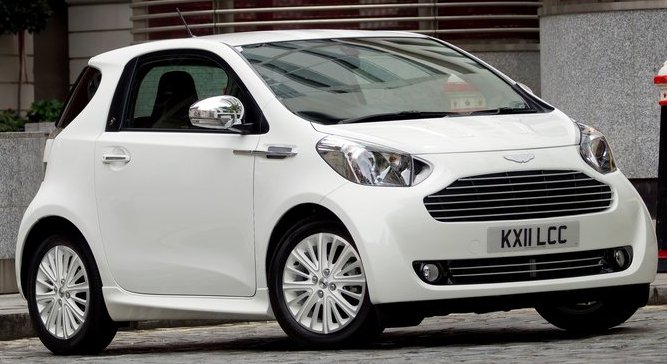
  • Aston Martin Cygnet
  • Chevrolet Spark
  • Citroen C1/C-Zero
  • Daihatsu Cuore/Copen
  • Fiat 500/Panda
  • Ford Ka
  • Hyundai i10
  • Kia Picanto
  • Mitsubishi i-Miev
  • Nissan Pixo
  • Opel Agila
  • Perodua Kenari/Kelisa (only in the UK)
  • Peugeot 107/iOn
  • Renault Twingo/Wind/Twizy
  • Seat Mii
  • Skoda Citigo
  • Smart Fortwo
  • Suzuki Splash/Alto
  • Toyota Aygo/iQ
  • VW Up!

ASIA

  • BYD F0
  • Chang’an Benben/Love
  • Chery QQ
  • Chevrolet Beat
  • Geely Panda
  • Hafei Lobo
  • Haima Prince/Saima
  • Honda Brio
  • Hyundai Santro/Eon
  • JAC Yueyue
  • Maruti 800
  • Riich M1
  • Suzuki Big Dipper/Wagon R
  • Tata Nano
  • Plus all Kei Cars from Japan

LATINAMERICA

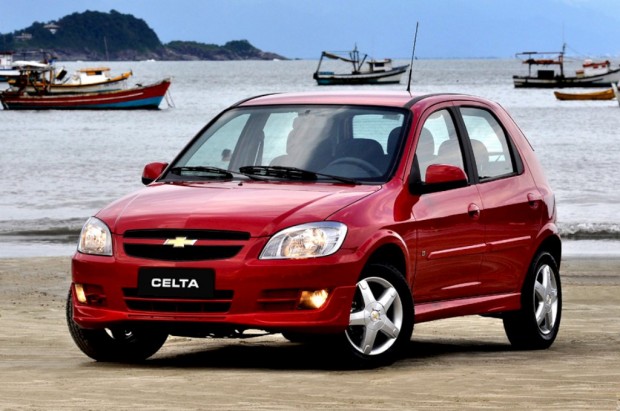
  • Chevrolet Celta/Prisma
  • Fiat Uno
  • VW Fox


Click here to see ‘B-Passenger’ Segment

What comes for Fiat brand

From today Fiat Group’s World Blog will make a close analysis to each brand of this important car group. It will evaluate Fiat, Alfa, Lancia, Chrysler, Dodge, Jeep, Maserati and Ferrari’s perspectives and its immediate and long term future. The analysis begins with Fiat brand, its global situation, its challenges and its future.Fiat models represent approximately 47% of total group sales*. Certainly it is the main brand of the group not only because of its importance in terms of units delivered but also because is more or less the most global name among its brand partners. Its presence can be found in several places around the world and significant differences among the countries it sells its models. Nevertheless it is really dependant of few markets and this makes its global position a bit unsecure as it has not spread its business in other important markets. Certainly Brazil and Italy are the core of its operations but it’s good to mention Turkey, Argentina and Poland as other markets where Fiat is well known. Brazil represents 44%* of its total sales (with Uno model as second best selling car of the country; represents 36% of its sales in Brazil). Then comes Italy that counts 21%, Turkey (JV with local Tofas) with 7% and Argentina with 5%*, these 2 markets being more important in terms of sales than Germany and France. In the other hand Fiat has still marginal market share in key markets as Russia, India and China, while in other countries such as a big part of Latinamerica and northern Europe its image is not the best.

500, Panda and Uno: 'A' Segment champions

In terms of model range it has developed it focusing on two markets: Italy and Europe, and Brazil and Mercosur. Europe’s one is made in Italy, Poland, Turkey and now in Serbia and Mexico but the number of models offered has declined in the last years. Fiat is very well recognized as doing small cars and therefore it is one of the few European car manufacturers to offer 2 models in this segment where it is the best selling car brand: the popular Panda and unique 500, both of them really appreciated by Europeans. In B segment they offer the Punto, which has been popular in Italy but not anymore in the rest of Europe as is getting really old (was launched in 2005). In C segment Fiat has failed with the beauty Bravo that has never got the attention from public not even in its native Italy. Then the presence in other segments is not important outside Italy. In South America there is more or less the same situation: small cars are the popular ones. Fiat Uno (launched in 2010) has a strong presence in Brazil and Argentina, as well as B segment Palio/Siena/Strada family (recently updated). But the presence in C segment is not really important.

A render of possible 500 roadster. Photo by solofiat500.com

This scenario must be taken into account when thinking of the brand’s future. Fiat must increase its presence in India, where small cars are extremely popular (and easily reach annual sales of 188.000 units). Also in China should increase its model range of sedans to go on sale along with the nice Viaggio and reach annual sales of at least 100.000 units. In Russia, where competition is tougher, they could sell aroung 57.000 units of local made products, most of them medium sedans. In Europe it should increase its model range in A and B segments offering a cheaper car than the Panda, a smaller than 500 (to become the Italian Smart) while in B segment offer more car body options for the Punto and increase the presence in small MPV segment with the coming 500L and also with revival of the great idea and ugly Multipla. Fiat must be recognized as the best small car manufacturer in Europe and Latin America and increase its market share in A and B segments, while focus on rebadged models for upper segments in other key markets.

The coming Fiat 500L 7 seats scale model. Photo by Autoblog Espanol

In other words for coming years Fiat must be recognized as world’s best small car manufacturer with presence in Europe, Latinamerica, China, India, Russia and Africa, if it wants to keep its place as car industry key player, specially now that Chinese and Indians car manufacturers are becoming global.

* According to Fiat Group’s World Data base

Fiat 500 beats Mini in the UK!

Photo by netcarshow.com

Once again the small 500 is in the headlines. This time in caotic Europe, more exactly in the United Kingdom, where last month, April, the Fiat was back in the Top 10 best selling cars of this important market. After 2 years without this result, the 500 sold 2600 units which allowed it to become the 10th most popular car in that country beating its archrival the Mini in its natural market. The reason for this success is still unknown but it is certainly important specially these days when competition in A segment is getting tough (VW Up’s take off, restyling of C1/107/Aygo and Twingo) while economic situation in the continent is getting worse. Last year Fiat 500 was number 15 among bestselling cars with more than 25.000 units sold, representing 50% of total sales of the brand. This year, if sales keep their path, the Cinquino could reach more than 30.000 units, a great number indeed. Meanwhile in Canada, the Fiat got a new record with 1.211 units beating March/12 record of 1.207 units. It seems this pretty car, no matter its age, keeps attracting so many people from so many places. Good for that!

Looking for opportunities: Middle East car market

Photo by Richard Allenby-Pratt, photographer

Jeep Grand Cherokee. Photo by Richard Allenby-Pratt

When it is about big SUV and trucks most of people think of American market. Certainly the US is known for being the place for large Ford, Rams, Sequoias and Tahoes. Their big roads and consumption have made these cars another product to be part of their lifes. But what most of people don’t know is that far away from there, in a really different culture, the big SUVs from Detroit and Japan find their world’s largest market share: the Middle East.

Thanks to great website bestsellingcarsblog.com, more information has been able about what it is called the Gulf Cooperation Council, composed by Saudi Arabia, United Arab Emirates, Bahrain, Kuwait, Oman and Qatar. And the numbers they gather together are not trivial. In 2011, more than 1.2 million cars, which represents a market larger than Australia’s and just behind South Korea’s or Canadian one. It is obvious that the good economic situation of these countries thanks to their big quantities of oil reserves, has translated to better economic conditions to some of their population. The strong and fast development can be seen in amazing cities as Dubai, Abu Dhabi or in the island of Bahrain. According to useconomyabout.com this rich economic bloc has an estimated population of 39 million inhabitants with an income per capita that goes from US$24.200 in Saudi Arabia up to $179.000 in Qatar!

Photo by netcarshow.com

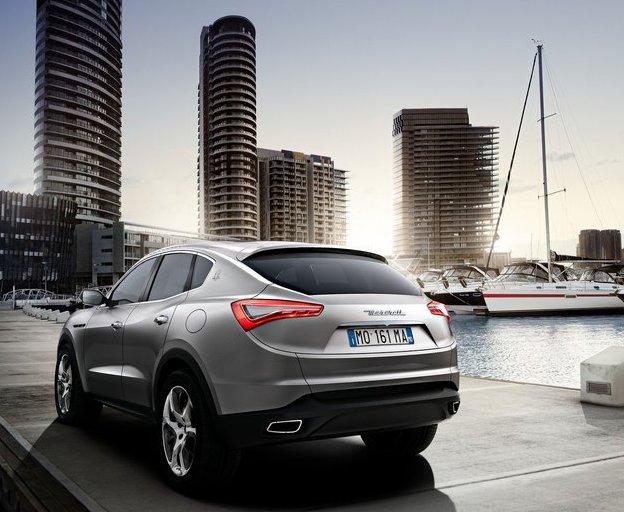
Maserati Kubang. Photo by netcarshow.com

Those numbers, along with their will to educate their people in order to expand their position in the world, have made of this region an important pole for all kind of investments. Car manufacturers have realized the importance of being there, specially after analyzing this particular market. The GCC is world’s largest market for SUV in terms of market share. All kind of SUVs count for 34% average of market share, which is higher than the historical SUV market, America, with 30%. Arabs don’t have any problem with gas prices, while their roads are big enough to allow the largest SUV to go around. That’s why it is not hard to hear that best selling car is the Toyota Land Cruiser, or to see lots of Nissan Patrol, Chevrolet Tahoe or Ford Expedition. Just in Qatar, 18% of total sales during 2011, corresponds to large SUV (F 4X4 segment)! On the other hand, small cars are really difficult to see as they count only 0.5% of total market.

 In this context SUV makers as Jeep must find an important place. Jeep’s portfolio offers models from C to E SUV segments and fit perfectly the needs of people desiring big and powerful offroads. In 2011 the brand, along with the Dodge Durango had an average market share of only 2.1%, very far from the absolute king, Toyota. Unfortunatelly, the brand is not well known in these countries and the competition with GM and Toyota makes things even more difficult. Anyway, taking into account the image Jeep has, its background making real SUVs, and the latest products such as the unique Grand Cherokee or the classical Wrangler, it is perfectly possible to reach bigger numbers. In fact personal forecasts take to 55.000 units of Jeep by the year 2016, after repositionating the brand and offering even larger and more luxury products than the Grand Cherokee. Ofcourse, that goal does not include the great welcome extra luxury SUVs from Maserati would have during the coming years, another brand to develop in this reach region.

Problems at home: 1.4 million cars in 2012


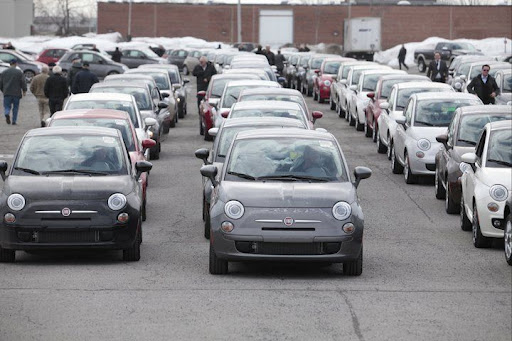
Picture by “Fiat 500 USA”

Very bad news are coming from Italy, Fiat’s historical market. According to UNRAE – Unione Nazionale Rappresentanti Autoveicoli Esteri, Italy’s main car importer association, the drop on sales during the first four months of 2012 will be a constant during the whole year. If coming months are as bad as the first 4 months in which the market dropped 20%, 1.430.000 cars will be sold in the country, or 18% less than previous year and the worst result since 1979 when 1.397.039 cars were delivered. Economic crisis is reflecting so well in this important sector which has been also affected by new taxes, VAT, Superbollo and so on, and high prices of gas. Some had began to talk about un-motorization of society, a word to describe the opposite situation when Italians began to buy and buy cars in the early 60’s.

This situation is really complicated specially if it is about a large market as Italy, in which not only Fiat but other as Germans, have a lot of investments. Those numbers would locate Italian car market in equal situation to Korean or Canadian numbers, both of them with lower populations. Fiat’s CEO, Sergio Marchionne, said that it is urgent to change European legislation in order to get more efficiency and quality decreasing unnecesary costs and at the same time begin to look outside and make of European car market a key player with its exports to markets abroad. And that is certainly what Europe must do.

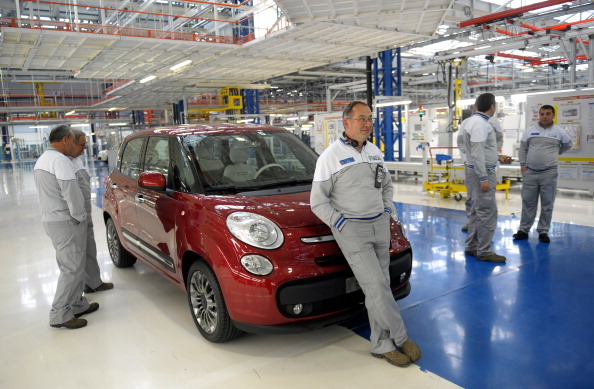
Employees stand next to a new Fiat 500L during the inauguration of a new factory in Kragujevac on April 16, 2012. AFP PHOTO/ ALEXA STANKOVIC

In a market that has stopped to grow and is getting old, the answer must be to develop new technologies, and be the place for research and development. While others keep growing and expanding their car markets, Europe should focus on technological leadership and added value to new ideas and concepts of cars. On the other hand they have to increase their exports to key markets such as South America, Northern Africa and the Middle East. Otherwise there would be extra capacity of their production plants and some of them should be necessary closed. But what Europe needs urgently is a change on its regulation about job flexibility. If job regulation continues like it is now, foreign competition will keep gaining market share and so European manufacturers will have more problems to solve.

In this context, Fiat has to look carefuly the production processes it has in the continent. Italy is with no doubt the heart of the group but its dependence on its labor force is forcing it to lose market share as its products are not being as cost competitive as competition from abroad (Koreans). They have to defend their natural market (with market share no less than 25% and a goal of 35%), while go abroad and increase production numbers in Poland, Turkey and the new Serbia. Those plants have to give Fiat better tools to increase its capacity to offer great cars with low production costs. Meanwhile in Italy, the new Panda made in Naples and next arrival of 500L must do their work to stop sales drop.

Alfa Romeo: to be or not to be

Alfa Romeo is perhaps Fiat’s most interesting brand. Its sportive soul and tradition have been always part of it, no matter its results in terms of sales and profits. A brand that is loved or hated, but does not generate indifference because of its particular history and the models it has offered up today, have placed it in the center of discussion. Today the question about it is if this great name will be able or not to continue with its glorious past in a really complicated future.

If the discussion takes place looking at today’s situation, certainly most of people would say there is nothing to do about. Alfa just offers 2 models, with only 1 body option, which are MiTo 3 doors and Giulietta 5 doors. None of them lack of beauty and sportiveness. But are not enough to reach big numbers. Only Giulietta had a good start which has been severely affected by new generation of 1 Series from BMW and will be even more when new Mercedes A Class, new Audi A3 and new Volvo V40 will be available. It means Alfa is moving slower and so its sales numbers: just in Italy (40% of total sales), its registrations have constantly decreased since July/11 and its market share dropped from 3.33% in 2011 to 3.12% in the first 4 months of 2012. In a market which is dramatically falling 20% (Jan-Apr/12), Giulietta’s registrations are 25% down, while MiTo’s 42%! And that’s only in Italy, but is happening in all Europe.

However, the discussion must be done taking into account future plans and the potential Alfa has. It is well known by everyone that VW is very interested in acquiring this company. They have said the potential it has worth it and there so many things to do with its good image. Something that Mr. Marchionne has always said: Alfa is a key player in the group because of what it means. Therefore, the analysis should look forward to coming years when more models will arrive and hopefully with a different approach. Alfa does not need only D and E segment cars but also a strong and unique SUV (or more). And the most important: positionate them in a different way in order to offer a sporty familiar car with great performance and handling and so, in a different subsegment from Germans. That is to become the new Abarth for upper segments, in which more clients would buy them because of unique driving sensations, exclusive design shapes and because it is an Alfa.

By doing so, Alfa could easily reach 500.000 units by the year 2016, specially if Fiat guys do it well in America, increase market share in Europe and Italy and explore interesting luxury car markets such as China, Middle East and Russia.