Fiat’s choice not to fulfill Italian incentives

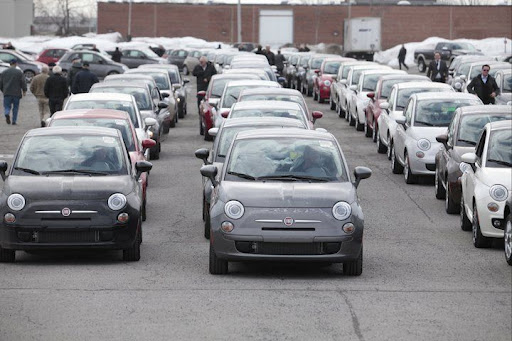
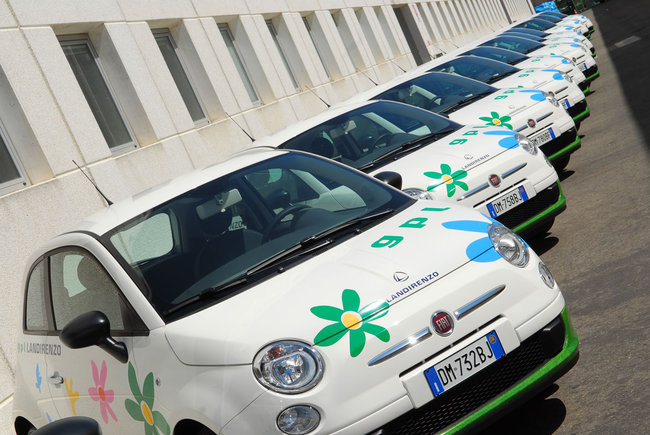
Fiat 500 GPL. Photo by autonovita.blogspot.it

Fiat 500 GPL. Photo by autonovita.blogspot.it

It seems Fiat Italy is going in the opposite direction of Italian government’s. This week one of main topics among specialized press was Fiat’s choice of working more and more in alternative solutions to the problem of gas. It is well-known by everybody that Italians are one of the few car groups not to deeply invest in the Electric car, not only because it’s a matter of costs but also because they don’t really want it. So far they have been working on the Fiat 500 EV, an electric version of the Cinquino with 100 hp powered by lithium-ion batteries and developed by Chrysler available from 2013. Nevertheless the board of the company is focused on GPL/Methane gas and they are really investing in a technology that might not sound as attractive and exciting as electric one, but that could be an interesting way of solving gas dependency and electric’s high cost.

Fiat 500 EV. Photo by forococheselectricos.com

Fiat 500 EV. Photo by forococheselectricos.com

GPL in Italy, or LPG (Liquefied petroleum gas) is a flammable mixture of hydrocarbon gases being used in cars since 1940s. It has a lower energy density than petrol . Therefore it results to be in an economic and already available technology, and at the same time less toxic to environment (23% fewer emissions) with the same performance features. This kind of energy source does not imply big engine modifications so the development costs are much less expensive than other future technologies. But if it is that good, why other car makers are not investing on it? the answer is in the supply chain. As electrics, GPL supply is not well-developed yet, and this make purchase final decision for clients to buy a regular car that guarantees energy supply. But the price of GPL compared to regular gas could be a reason for future growth of this energy source, though its car registrations are still low: in 2011 just 3,2% of cars sold in Italy had GPL, much more than electrics and hybrids, 0,02% and 0,29%. From the 122.288 Puntos sold in Italy last year, 5.581 (4.6%) had GPL technology and 10.455 had Methane gas. In the case of Panda, 4.2% of them were GPL and 16.9% had Methane energy source. Eventhough the small numbers and the terrible results GPL cars had in 2011 (sales were down 80% in Italy), Fiat is focusing and investing a lot in this kind of technology. They believe is a more efficient way to solve the problem of gas dependency as it takes less time and money to get better technologies. Their choice is also based on the negative side of Hybrid/Electric cars: social and economic sustainability, autonomy, costs and recharge times.
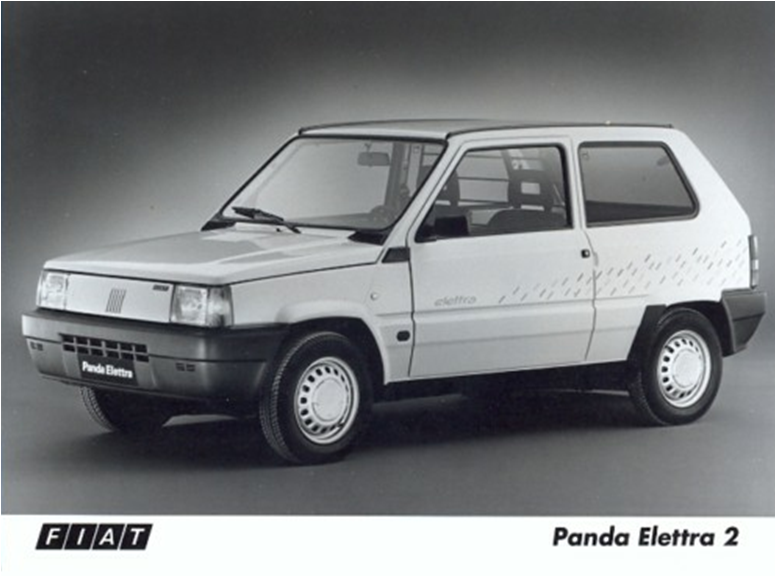
Fiat Panda Elettra press photo. The car was introduced in 1990 but its weight (1150 kg) did not make of it an interesting option as it was moved by only 19 HP

Fiat Panda Elettra press photo. The car was introduced in 1990 but its weight (1150 kg) did not make of it an interesting option as it was moved by only 19 HP

On the other hand Italian government is getting ready to present its incentive plan for electric and hybrid cars to become a reality from January 2013. This plans aims to boost sales of this kind of vehicles through discounts (subsidies) of $5.000€  from 2013 until 2015, and then $3.000€ for the next years. The discount could be only available for those cars with emissions under 50 g/km of CO2. For those with emissions between 50 and 95 g/km, the help would be of $1.200€. Italian government wants the electric cars to become more popular as their current prices are really high making their sales an irrelevant number, just 304 electric and 5.127 hybrid cars were sold in 2011. Without taking into account how Italian government will get the money for this, it is certainly a weird news if it is considered the position of Fiat, the only Italian car manufacturer.
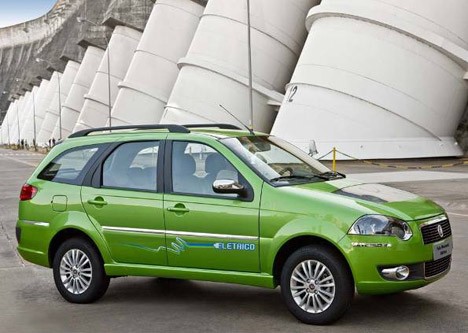
Fiat Palio Electrico (Brazil). Electric Range (autonomy): 85 miles (135 kilometers). Speed: 60 MPH. Price about 70 000 dollars USD. Info and photo by electriccarphotos.com

Fiat Palio Electrico (Brazil). Electric Range (autonomy): 85 miles (135 kilometers). Speed: 60 MPH. Price about 70 000 dollars USD. Info and photo by electriccarphotos.com

Good for the intentions of Italian authorities and bad for Fiat if this plan becomes a reality. But somehow the government is giving the reason to Fiat. If an industry needs public support to become popular is because there is still a long path to become profitable. Government aids can boost a sector but at the end it will be unsustainable if the producers do not gain money without the aid. It is clear that electric cars are a growing industry and is still in an introduction and development phase, and therefore their demand is still low. But it is clear also that is not the only solution for energy sources, and maybe investing in what already exists to make of it more efficient can be the key for sustainability without public helps, that even with them, the final price for clients would still be high.
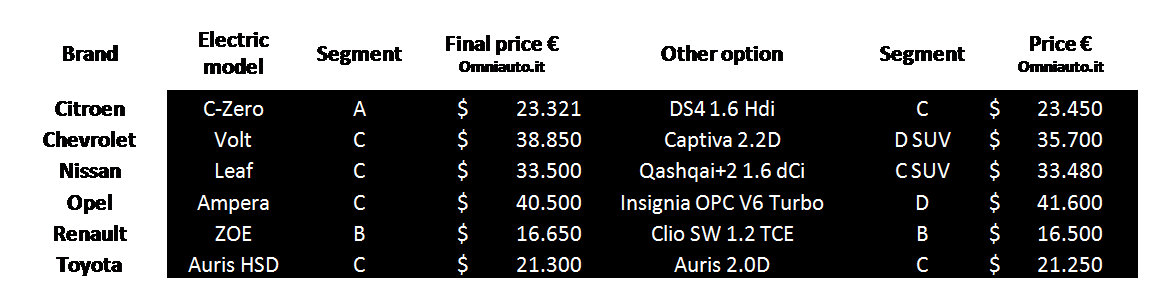
Electric vs. Gas options and prices in the same company. Information by omniauto.it and es.autoblog.com

Electric vs. Gas options and prices in the same company. Information by omniauto.it and es.autoblog.com
‘Fabbrica Italia’: how good is it for Fiat?

“There will be more Italy in the world”. A promise made by Fiat’s president, John Elkann and Fiat’s CEO, Sergio Marchionne, in April 2010 when ‘Fabbrica Italia’ was presented as part of Strategic Plan 2010-2014 for the group. The main point of that plan was to increase Italian car production in order to become of it one of Europe’s largest. In fact, by the year they confirmed the plan, Italy’s output was only of 800.000 cars per year, very far from its neighbors Spain, Germany and France. Main features of ‘FI’ were: to double production of cars (up to 1,65 million), while 70% of Fiat’s investments would be located in Italy. The plan included also the goal to increase the number of Italian cars to be exported from 44% to 65%, or in other words, 65% of the Fiats produced in Italy would be sold in foreign markets. Nonetheless the good intentions, real situation 2 years later is very different. In 2011 there were produced 790.000 cars in Italy, 5.7% less than in 2010, when Italian output was 838.000 units. Certainly the results have not been the ones planned, as Italian car market is facing one of its worst years, while the economic crisis in the continent along with labor and strike problems in Italy are definetely affecting Fiat’s output. For 2012, when Panda’s production was moved from Poland to Italy, final numbers of cars produced will be even worse. So, were Mr. Elkann and Mr. Marchionne wrong by saying production should be increased by the year 2014? how useful is it for Fiat to increase production in its native Italy?

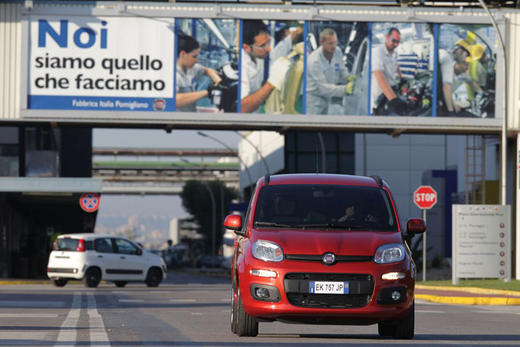
'We are what we do'. A Panda leaving Pomigliano Factory

‘We are what we do’. A Panda leaving Pomigliano Factory

Part of ‘Fabbrica Italia’ had been complied: Fiat finally decided to bring the production of its best selling mini car, the Panda, back to Italy. The second generation of it was produced in Tichy, Poland, and it allowed to offer a very competitive product thanks to low labor costs. The Panda became Europe’s ‘A’ segment best selling car. The decision to build it again in Italy was not easy as it is a core product and Italian labor costs are higher. Nevertheless they rebuild Pomigliano factory making of it one of Fiat’s best factories in the world. In exchange they moved Lancia Ypsilon’s production from Italy to Poland as Tichy factory was only going to produce the successful 500 and its step brother, the Ford Ka. Nowadays the Italian Panda continues its success in Italy and Europe but the car is not as cheap as it was, while Italian economic crisis and continuous problems with Union of workers have affected initial targets. The situation was even terrible in March/12, when transportation strike did not allow Fiat to transport its cars from the factories to the dealers, something that was terrible for the new Panda, that had its first weeks in European dealers and was part of a nice introduction campaign.

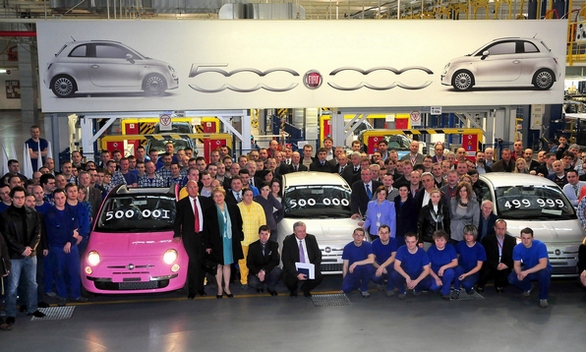
29/03/2010: 500.000 units produced of Fiat 500 in Tychy, Poland

29/03/2010: 500.000 units produced of Fiat 500 in Tychy, Poland

All those problems would be enough to conclude that Italy is not the best country to produce cars especially now when emerging markets are becoming powerfull in terms of sales and production and labor costs. In terms of units produced and people employed/labor costs, all Italian factories (Mirafiori, Melfi, Pomigliano and Cassino) would not passed the exam. Brazil, Argentina, Poland and now Serbia are more efficient. But even like that, it is not enough to think that Italy is not a good place to produce cars for Fiat Group. Italy is and has been part of Fiat. It is not only the country were it was born but it is also part of its personality, of its moves around the world. Italy is a high valuable asset for Fiat as it projects its great image all over the world with its history, culture and what is known as the ‘Italian touch’. Fiat is what is has become thanks to Italians. Therefore the heart of the group must be always in Italy no matter where the brain will be located (Auburn Hills?). It means that production must go on with better perspectives in that country, along with better labor practices to make it more flexible and allow more efficient production. This would allow to have a more efficient Italy but at the same Fiat should not point all of its attention in just this market. In 2011, Italy represented 13% of Fiat-Chrysler’s worldwide sales, 26% of Fiat Group sales, and 55% of European Union sales*.  To concentrate sales in few markets result in a dangerous task. Italy is important but can not be the whole. Meanwhile, Fiat’s guys must continue to open new markets always keeping in mind 2 things: productivity and Italian touch.

*FGW data base

Problems at home: 1.4 million cars in 2012


Picture by “Fiat 500 USA”

Very bad news are coming from Italy, Fiat’s historical market. According to UNRAE – Unione Nazionale Rappresentanti Autoveicoli Esteri, Italy’s main car importer association, the drop on sales during the first four months of 2012 will be a constant during the whole year. If coming months are as bad as the first 4 months in which the market dropped 20%, 1.430.000 cars will be sold in the country, or 18% less than previous year and the worst result since 1979 when 1.397.039 cars were delivered. Economic crisis is reflecting so well in this important sector which has been also affected by new taxes, VAT, Superbollo and so on, and high prices of gas. Some had began to talk about un-motorization of society, a word to describe the opposite situation when Italians began to buy and buy cars in the early 60’s.

This situation is really complicated specially if it is about a large market as Italy, in which not only Fiat but other as Germans, have a lot of investments. Those numbers would locate Italian car market in equal situation to Korean or Canadian numbers, both of them with lower populations. Fiat’s CEO, Sergio Marchionne, said that it is urgent to change European legislation in order to get more efficiency and quality decreasing unnecesary costs and at the same time begin to look outside and make of European car market a key player with its exports to markets abroad. And that is certainly what Europe must do.

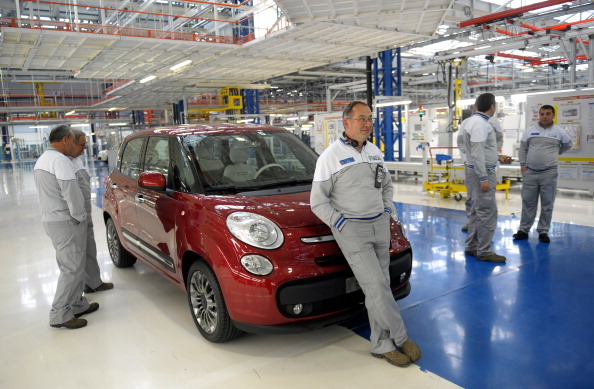
Employees stand next to a new Fiat 500L during the inauguration of a new factory in Kragujevac on April 16, 2012. AFP PHOTO/ ALEXA STANKOVIC

In a market that has stopped to grow and is getting old, the answer must be to develop new technologies, and be the place for research and development. While others keep growing and expanding their car markets, Europe should focus on technological leadership and added value to new ideas and concepts of cars. On the other hand they have to increase their exports to key markets such as South America, Northern Africa and the Middle East. Otherwise there would be extra capacity of their production plants and some of them should be necessary closed. But what Europe needs urgently is a change on its regulation about job flexibility. If job regulation continues like it is now, foreign competition will keep gaining market share and so European manufacturers will have more problems to solve.

In this context, Fiat has to look carefuly the production processes it has in the continent. Italy is with no doubt the heart of the group but its dependence on its labor force is forcing it to lose market share as its products are not being as cost competitive as competition from abroad (Koreans). They have to defend their natural market (with market share no less than 25% and a goal of 35%), while go abroad and increase production numbers in Poland, Turkey and the new Serbia. Those plants have to give Fiat better tools to increase its capacity to offer great cars with low production costs. Meanwhile in Italy, the new Panda made in Naples and next arrival of 500L must do their work to stop sales drop.