Fiat in trouble. VW Up! hits the market

Fiat is in trouble, big trouble. It is not only a matter of its home market, Italy, or the delay in plans for new products. The problems with its factories and Fabbrica Italia are just some more to the latest one. What used to be the main strength of the group is now being hit hard by Europe’s largest car maker. VW is having great results with its trio Up!/Mii/Citigo and it means that Fiat is feeling the success of the Slovaks with less sales figures for its couple 500/Panda. Last month is the best example as sales figures for the Italian couple drop while the VW trio seems not to feel the crisis. As I have done it during the last months, the analysis takes into account the sales figures for Fiat 500 and Panda vs. the trio together, Up!, Mii and Citigo, as they are the same car. The analysis includes the countries where there is data available every month: the largest markets, Germany, France, Italy and Spain (except the UK) plus Netherlands, Ireland, Sweden, Denmark, Poland, Czech Republic, Slovakia, Slovenia, Austria, Switzerland, Romania and Greece. 16 countries that can tell a lot about sales trend of these small cars. Due to lack of data important markets as the UK, Belgium and Portugal are out of the monthly analysis. Nevertheless even though the UK is not included (is the second largest market for the 500 in Europe), the results for August indicate that Fiat should be worrying a lot.

Though Fiat invested 800 million euros in the plant of Pomigliano for the production of the new Panda, the small car continues to lead the ‘A-Segment’ but far away from initial forecast. Photo by: Automobilismo.it

In August 2012 the trio sold 12.041 cars*, which means more than double of Fiat 500’s registrations and almost 4.000 units above the Fiat Panda, the historical leader. This trend was evident in July when the Up!/Mii/Citigo was just 51 units behind the Panda. But last month sales figures dropped for the Italian couple while the Slovak trio did not experience it that way. Compared to July figures, the 500 was the most affected one, down a massive 40%. Then comes the Panda, down 37% and finally the trio from VW Group, down only 9%. The results are really bad for Fiat specially if it is considered the fact that both models represent more than half of the brand sales in Europe and now the Punto is becoming a rare model to see in the top best-selling cars outside Italy. It is also even more complicated taking into account that the Panda is an all new model with no more than 10 months old, and the investment required for it was around 800 million euros. At this point is when Marchionne says that there is not enough market for new models, specially if that market is being conquered by VW in all segments. In the other hand there are some people who say that there is no such cataclysm and August bad results for the small couple are just punctual. Some how that position is right.

The new versions of the 500 may be helping but after 5 years in the market the small Fiat should be thinking of a successor

Last month’s results can be explained from several points of view. First of all August has been always a month of small numbers all over Europe as people go out for vacations. Second, European car market is certainly passing thru perhaps the most difficult times in decades. And third, Italian market is becoming one of the worst in terms of sales fall. Just in August the market was down 20%, which is the biggest fall among big European markets. For example, in August/11 almost 1.800 Fiat 500 were sold in Italy, and one year later 1.700 were sold (down only 4%) so at the end the bad result for the 500 could be explained as a ‘seasonable’ thing, more than really bad results. The same situation for the Panda and Italy: one year ago 4.532 units were sold against 5.011 last month. Of course, if those numbers are compared to July ones, the conclusion would be completely different. What happens in Italy every August does not happen that much in other European markets. Germany for example saw its total car sales to fall 5%, year-on-year, but at the end the total number is not far from previous months. So it is important to consider what happens in main markets for the models analyzed. As the 500 and specially the Panda depends a lot on Italian market, their total sales figures for Europe will be strongly affected by the Italian result. In the other hand the Up! depends a lot on German market (42%) but that market does not collapse in August.
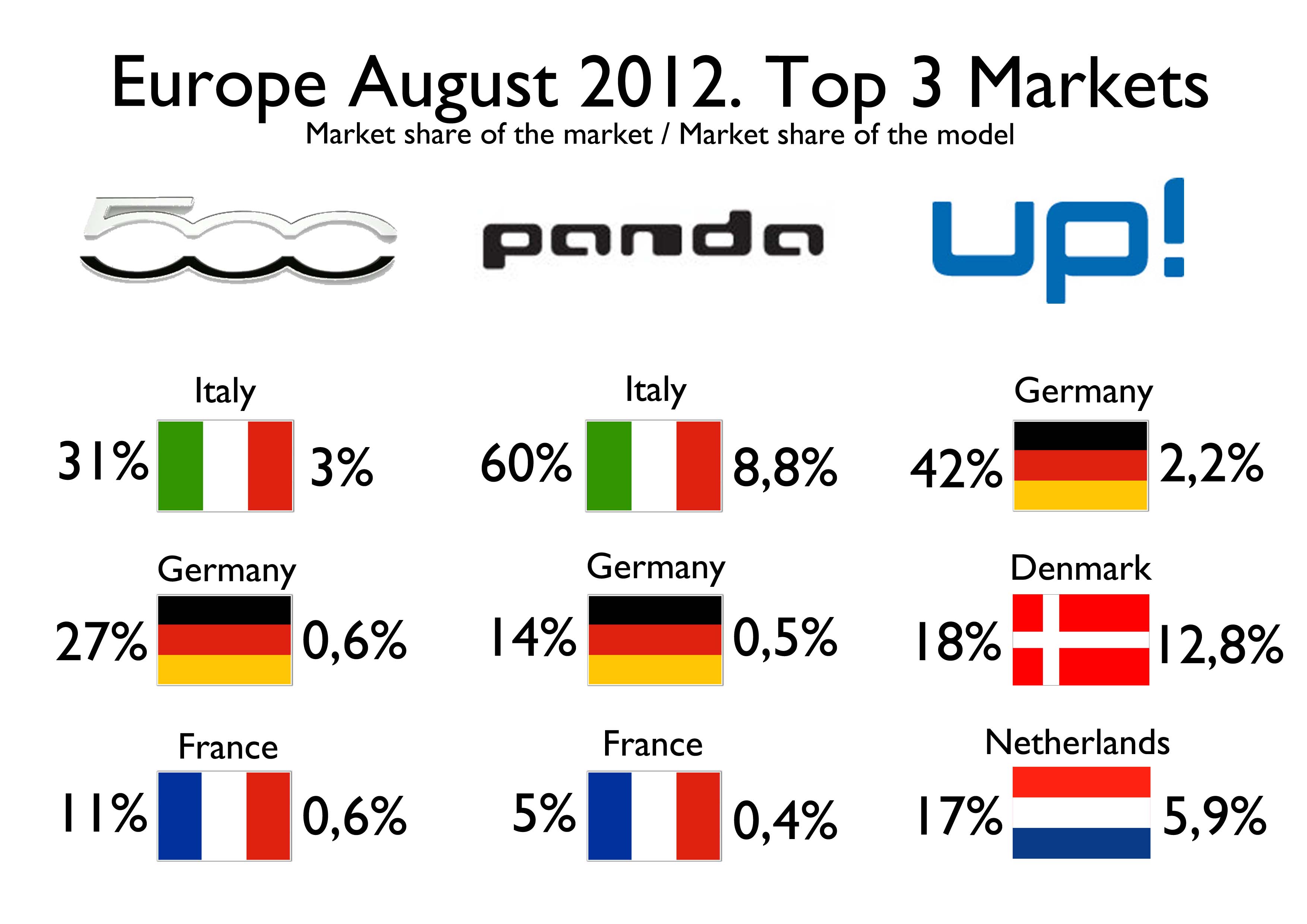
This figure shows the main 3 markets for each model. The left number indicates the market share of that market on model’s total sales. The right number indicates the market share of the model in that market. It means Italy represents 31% of Fiat 500 sales in Europe, while that model has 3% of Italian market sales. Fiat Panda sales figures include the second generation numbers. VW Up! sales figures include Skoda Citigo and Seat Mii numbers. Source: bestsellingcarsblog.net

But if Italy and Germany are not considered, certainly VW is winning the match. The trio sold more than 2.000 units in small markets as Denmark or Netherlands, while they sold some more in France, Romania, Austria, Slovakia, Slovenia, Sweden and Switzerland. Fiat did well in Germany and the Netherlands with the 500, while the Panda did not do bad in Austria and Denmark. French sales figures for the Italian couple are really bad and it contributes to less numbers, as traditionally France has been an important market for both models. The good markets for ‘A-segment’ cars are now being conquered by VW. It means Denmark and the Netherlands, where this kind of cars is very popular (because of high taxes to all cars). Other important markets (in terms of units sold and not in terms of  ‘A-Segment’  market share) such as Spain and France, Fiat still dominates the battle. Year-to-date numbers show that the Slovak trio surpasses for the very first time the Fiat 500 with 2.300 units. If the three models were considered as a unique model, the 500 would not be anymore the second best-selling ‘A-segment’ car in Europe. The Panda is still the best-selling small car but initial forecast and the capacity of Pomigliano plant are far away from current results.

Source: bestsellingcarsblog.net

*Not included Mii and Citigo Italian sales numbers


Click here to see Fiat Panda/500 vs. VW Up! September 2012

Click here to see Fiat Panda/500 vs. VW Up! July 2012

Learning about cars: the ‘B-MPV’ Segment

The 5 seat version of the Fiat 500L, presented in Geneva 2012 and produced in Serbia for all markets.

MPV, or Multi-Propose-Vehicles are those which are also called Minivans or Monovolume. They were created by Chrysler with the Town & Country, and Renault with the Espace in the early 80’s. They became very popular in America and then in Europe when Renault began a new trend with the Scenic, the MPV version of a regular car, the Megane. Though their shape has evolved during the last years most of them are recognizable because of their height (more than common cars) and because of the size and form of front window, which arrives most of the times up to the front of the car. They are intended to transport people in a more comfortable way, with more roominess. As it was said before, most of the offer is based on regular cars, which serve as the basis for larger versions that can take even more than 5 passengers. In the passenger car industry there are 3 types of MPV, the smallest ones, which come from B-Segment cars and take no more than 5 passengers; the ‘C-MPV’ that are a bit larger, based on C-Segment cars and sometimes take 7 passengers. And finally the real MPV, which are the ‘D-MPV’ not based on regular cars but created as real vans sometimes really luxurious and powerful.

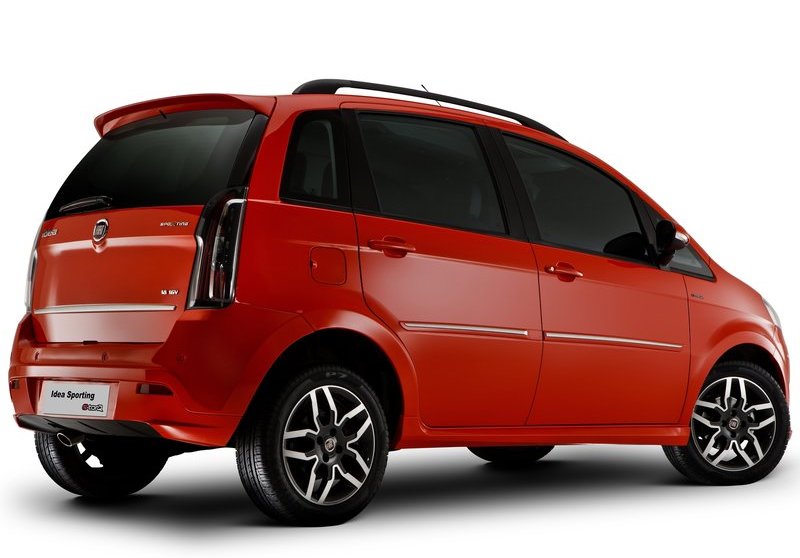
Lancia Musa, introduced in 2004 with the Fiat Idea, and still on sale. As many Fiat products, it is only popular in Italy. Photo by: http://www.netcarshow.com

The original Fiat Idea was taken by Brazil division and they developed a more fresh product after a deep facelift. It sold 32.000 units in Mercosur market in 2011. Source: FGW data basis. Photo by: http://www.netcarshow.com

The smallest ones are the most recent. Car makers look to add a more familiar version of their 3/5 door ‘B-Segment’ cars, as the small Station Wagons are not really popular not even in the emerging markets. Most of them are based on their brothers, but some of them were created as that. The first ones can be the Renault Modus (based on the third generation Clio), the Citroen C3 Picasso, the Opel/Vauxhall Meriva (based on the Corsa), or the new Fiat 500L, which is supposedly based on the small ‘A-Segment’ Fiat 500, but uses the platform for the next generation Punto. But there are also others created as B-MPV, such as the Honda Fit/Jazz, the old Mercedes A-Class or the old Mitsubishi Colt. All of them are no larger than 4.1 m but are much more comfortable than regular ‘B’ cars. Though the idea of MPV was born in the US market, this particular kind is not popular at all in the States. Actually just the Honda Fit, Kia Soul and Nissan Cube are the only offer over there. Instead, Europe and South East Asia are the best markets for them. In 2011 more than 530.000 units were sold, being Germany the largest market with 140.000. The segment represented 4% of total sales, and it had the best market share in Slovenia (5,4%) and Switzerland (5,1%). But the largest market for small MPV is Japan with more than 400.000 units sold in 2011, followed by Indonesia with more than 300.000 units, or almost 60% of total market. Indonesians use them for everything: taxi, public transportation, and so on. The Suzuki Ertiga (based on Suzuki Swift), the Daihatsu Xenia, Toyota Avanza are a common thing to see in that country. The comes China with more than 200.000 units. Almost the same amount sold in Brazil, where they have reached an important market share (5,6%). Worldwide around 1.8 million were sold, or 2,9% of total sales*.

The Chrysler PT-Cruiser Pacific Coast Highway version. It was a very popular model in North America no matter the segment is not at all. Photo by: http://www.netcarshow.com

The segment is mainly dominated by Japanese: Suzuki, Daihatsu, Toyota, Nissan and Honda. But in Europe the French gained an important part of the market, while Germans with Opel and Ford offer great products. Koreans also created special cars for European market: Hyundai iX20 and Kia Venga. It is considered a small segment so Fiat could have a dominant position, due to the fact that they are well-known for producing small and good cars. But the situation is far from that scenario. Some years ago Fiat presented the Idea and its twin, the Lancia Musa, but sales in Europe were a complete flop. No matter it is not the most popular segment in Europe or Brazil, Fiat must have an important role there. It is why the Fiat 500L was developed and is wisely produced in Serbia to be more price competitive and access to different markets. The car is already available in Italy and France and soon in all Europe, and is expected to arrive in the United States next year. It will have two versions, 5 and 7 seats and wants to make use of the popularity of the small Fiat 500. Fiat has invested a lot in this model as it will have to cover 2 segments for some time, the ‘B-MPV’ and ‘C’ as the Fiat Bravo is getting old and its successor may arrive late. Chrysler did also have one offer with the very popular PT-Cruiser, which could serve as a good background for future models, although the segment is not really popular in North America.

Click here to see ‘C-MPV’ Segment

Click here to see ‘E/F-SUV’ Segment


*Source: Fiat Group’s World data basis

European car industry crisis. A possible solution?

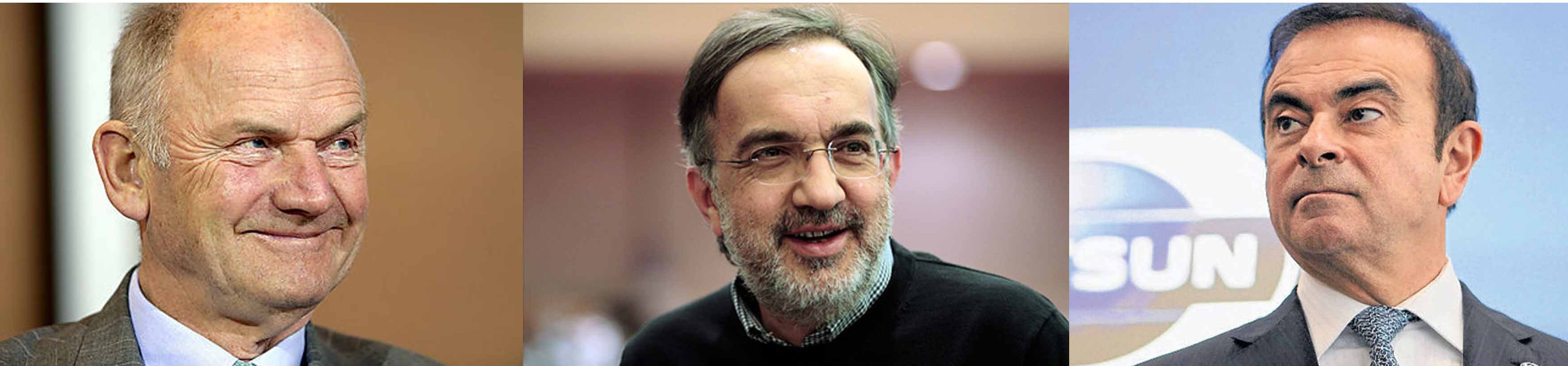
Europe’s debt crisis and its impact on car industry has become a regular topic among automotive analysts. On a daily basis, specialized press and automakers’ CEOs talk about it in several statements which sometimes can result in an alarm for coming months. And it’s true, the worst has not come yet and it is why VW CEO, Ferdinand Piëch, opened up the discussion about the future of European car makers. He said that current crisis will eliminate one of the big ones of the region as the market will continue to get smaller and production over capacity will be that big that at least one big car maker will disappear. This statement must be analyzed carefully as it comes from Europe’s largest car maker and one of the few that is not having problems at all. No matter whether it is true or not, what Piëch wants is to create even more chaos and uncertainty not only among other car makers having problems right now, but among car buyers who will choose those brands with a ‘brilliant’ future. VW is against Sergio Marchionne’s proposal of controlling over capacity by all car makers in the continent. They earn money thanks to great and boring products while they make use of overseas earnings (China) to compensate the possible losses they could have in Europe. Meanwhile the other ‘big’ are dealing with their own problems: Opel struggling with everybody to keep being protected by GM; Ford loosing more than 1.000 million euros; PSA dealing with French government to close one of its big factories; Renault looking at its operations in South America and Asia to endure the storm; and finally Fiat dealing with a big fall in its native market and fighting with labor unions to rise the productivity.

Ferdinand Piech from VW. Sergio Marchionne, Fiat. Carlos Ghosn, Renault-Nissan. Piech says one big European car maker will disappear by the end of the crisis. Marchionne wants to decrease European production levels, while Ghosn says nothing important will happen during the crisis. Photo by: Automovil Online, Jeff Kobalsky, El Comercio

Today, Renault-Nissan’s CEO, Carlos Ghosn, said nothing extreme will happen. But the thing is not to predict what will happen in the coming years. What all carmakers must do is to find quick solutions to current problem. Of course the first ‘remedy’ is to fire employees. PSA is planning to fire around 10.000 workers so they can reduce expenses and therefore the losses. Meanwhile Marchionne said today that Fiat will not close anymore plants in Italy but will send workers home for more days. All these decisions will solve the problem for some months but at the end the real problem will be the same: more production capacity than demand for the coming years (some say until 2020). After considering this terrible scenario it came to my mind how this 5 big carmakers could get out of the crisis. They have a lot in common and share the same threat, VW domination in Europe. All of them can be classified as mainstream car companies which produces all kind of vehicles, from small A-Segment cars up to big LCV. If they do not move VW will pass from current 23% market share to a bigger part of European market and from that moment trying to stop it will be almost impossible. So, if they are so similar and have the same problem, why not to join forces? it is not about an alliance as it is known so far. But it is about creating a special group composed by GM, Ford, PSA, Renault and Fiat, only for Europe in order to get out of the crisis and stop VW growth. But how could they join forces if they are competitors? how could they share any project if they have interests not only in Europe but outside?

VW is becoming a giant in Europe. If the other big ones don’t do anything they will have even more difficult times in the coming years.

One of the possible solution for them could be to specialize each company on what it can do best only in European market. If they stop competing among them they could get better sales figures producing the cars they do the best. And if European market is divided into segments, well they could divide the market and their production according to the segment they dominate. In other words each car maker would be assigned one segment to produce a car to be sold under all brands. So, if they are 5 car makers they could select the top 5 European main segments by sales figures and then assign each one to a specific car maker. For example, Fiat is the absolute leader of A-Segment in Europe, so for the coming years and exclusively for Europe, Fiat would only produce small cars in its Italian factories to be sold not only under Fiat brand but also as Peugeot, Citroen, Renault, Opel and Ford. Following the example, PSA could produce in France the B-Segment car for all brands. Then Renault could do the same for C-Segment, and Opel could make the D-Segment offer in Germany, while Ford would be in charge of producing all MPVs of the European ‘alliance’. Doing so, the big 5 would benefit from cost savings as they would work together in the development of each car, while they could enhance their local production as more units would be required to fulfill the demand of not only one brand but five. In the example, Fiat would not produce 250.000 units of its 500 and Panda but would have to increase the production up to 600.000 or 700.000 units that means the A-Segment for the 5 makers (last year around 1.2 million units were sold in Europe and VW did not count for anything of them as they had not launched the Up/Mii/Citigo yet). Fiat would increase the production of small cars using its plants in Italy, where it now produces other segments such as the Punto or Bravo. The production of those segments would move to other factories of its allies. In the example, it means that the Punto would now be the result of a unique model developed by all 5 car makers but produced in PSA factories. Of course, for every segment, each car maker would apply a deep design work to differentiate each model from the other brands and keep the family feeling.

Source: Fiat Group’s World Data basis

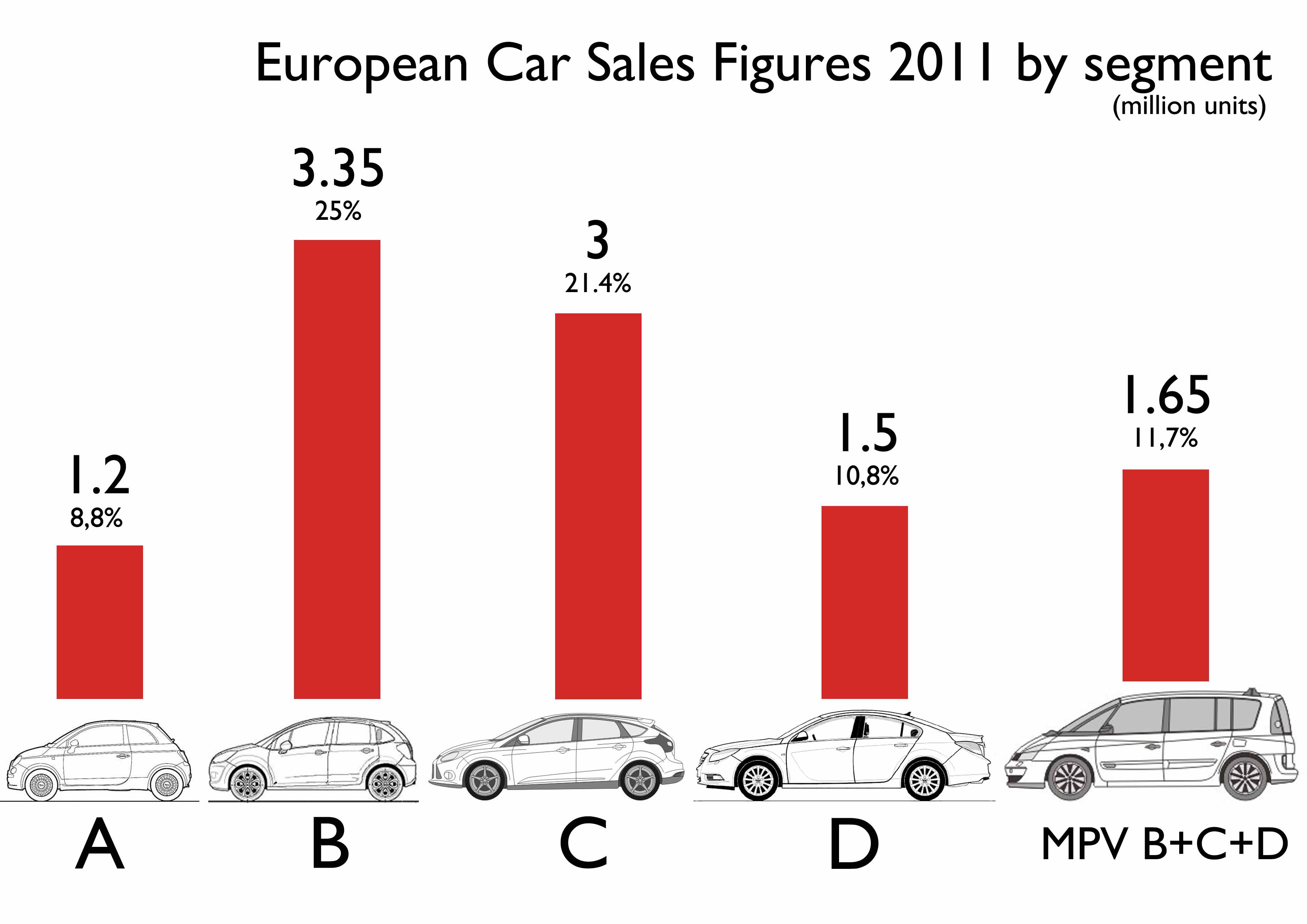
There are several real examples of this kind of deals and Fiat is part of them. The 500 and Ford Ka produced in Poland, or the Fiat Doblo and Opel Combo produced in Turkey. Or the Suzuki SX4 and Fiat Sedici in Hungary. The difference now would be that not 2 but 5 car makers would be involved in the deal. Of course not all segments have the same size. In 2011, almost 1.2 million units were A-Segment, B-Segment counted for more than 3.3 million, not far from 2.9 million cars sold of C-Segment. Over 1.5 million cars were  D-Segment and all MPV segments sold 1.6 million units*. Therefore in the example, Fiat would be in charge of a segment which is much smaller than the one assigned to PSA or Renault. How they could solve these differences? if for example, Fiat has to produce the A-Segment it would focus all its plants to build the small car but it could also produce some part of the B or C segment car, so PSA would not only produce the major part of B-Segment but some part of it would move to Italy to compensate for the smaller part Fiat got. In other words each manufacturer would do what it can do the best but would not have a dominant position in terms of production. Does it mean that a company like Fiat would have to stop building the Punto, Bravo or the Giulietta to give some space to more production of the Panda? yes. For the coming years Fiat would not have an authentic B, C, D or MPV offer but the result of a work together with Opel, Ford, PSA and Renault. Doing that Fiat would benefit from lower development expenses and from the increase of its production in Italy, while the competition would not be as hard as it is now, with not only VW in the field but several others trying to get more market share with a price war. It also means that at the end the 5 big would decrease a part of their production capacity but in a controlled way and all of them doing it, something that Marchionne has been saying from the beginning of the crisis.

As they are independent companies the idea must only work in Europe and the ideas and developments got by the team work can not be taken by anyone to develop car outside Europe. If the problem is in Europe the solution must be exclusively over there. Problems? a lot. First of all, none of the carmakers cited before will want to share independence especially with direct competitors. Second, some carmakers have developed their own models for next years: Fiat presented the Panda in 2011, Peugeot showed the 208 in 2012, while Renault has just shown the new Clio. It also means that all of them must reduce current production levels and maybe fire more people, but at the end they could do it carefully and after an agreement between them, while the big VW could be finally worrying about real tough competition. What would VW think about this idea?

*FGW data basis

Learning about cars: the ‘E/F-SUV’ Segment

The largest and most luxury SUV are the ones belonging to E and F segment. They could be together in the same segment but some of them are bigger than others so for better reasons they are separated, though in terms of prices all of them are really expensive. This kind of SUV were born in the US, where American consumers love really big cars with enough interior room and enormous engines. It is why America is the largest market for them and last year there were sold almost 1.2 million ‘E-SUVs’ and more than 270.000 ‘F-SUV’. Those are really big numbers which are followed by China, where more than 100.000 units were sold, and Canada with 92.000 units*. But in terms of market share the situation changes. All Middle East markets love them. In Qatar 25% of the cars sold are ‘E/F-SUVs’, followed by United Arab Emirates, 22%, and Kuwait, 21%. Oil-economies love fuel consumption.

The Kubang can reach interesting numbers if it is correctly positionated making use of Jeep’s know how. Photo by http://www.autoevolution.com

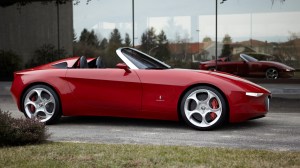
As it was said before Americans created the segment so they are the most popular. Ford, Lincoln, Jeep, Dodge, Chevrolet, GMC and Cadillac are the kings of the road. But they are not alone. British have always had the Range Rover as a referent, while Germans have some offer with Mercedes, BMW, Audi, VW and Porsche. Japanese are also strong with their big Toyotas (some of them are among best-selling cars in the Middle East) and the giant Nissan Patrol. Chinese are just begining to have some offer but they are more focused on smaller SUV as big ones become popular. Fiat-Chrysler position in the segment is small but strong. The Jeep Grand Cherokee (E-SUV segment) is perhaps  one of the most populars referents of the segment not only in America. Its nameplate is known everywhere in the world and means strength, power and luxury. All of its generations have been popular but the latest one has gained more reputation among luxury options. Based on it Dodge offers the Durango, another big SUV with opposite results. Since it was launched 2 years ago, the car has never gained an important place in the segment no matter it is more or less the same product of the Grand Cherokee. Fiat is now working on the launch of new Maserati Kubang (presented in Frankfurt 2011) as a direct rival to Porsche Cayenne and Range Rover. According to what they showed so far, it seems Maserati will have a great product with the latest technology and best Ferrari and Chrysler engines.

Unlike the Grand Cherokee, the Durango has never been popular since its launch in 2011. YTD sales figures drop 20.76% in USA. Photo by http://www.netcarshow.com

In 2011 Fiat-Chrysler had 15% of the segment in America and 16% in Canada. In Europe the Jeep counted for 8.6% of the segment in Switzerland, 9% in Poland, and almost 10% in Italy. In Latinamerica, it had 16% of the segment in Argentina, 20% in Dominican Republic and 57% in Venezuela! In the Middle East, the Grand Cherokee had 10% in Oman and 12% in Bahrain. Those are not bad numbers at all and if Fiat knows how to positionate the Kubang making use of Jeep expertise, they could gain even more market share thanks to great products.

Click here to see ‘D-SUV’ Segment

Click here to see ‘B-MPV’ Segment


* FGW

Learning about cars: the ‘D-SUV’ Segment

All those SUV with some luxury features and larger size, without being the most luxury or expensive ones, are considered the ‘D’ segment SUV. These Sport Utility Vehicles are not based on regular passenger cars but most of them are created as what they are, SUVs. It means they don’t share any component or platform with any other car and their goal is to serve as real tall and powerful cars. They are a bit less popular than ‘C-SUV’ but they rule in world’s largest market, the USA. Last year more than 2.5 million units were sold in the main markets, and the US market counted for half of them. They are the most popular SUV in America. The segment is mainly ruled by Asians and Americans, who have always had mid-size SUV. Anyway with the arrival of smaller SUV and better luxury larger SUV, the ‘D’ SUVs are struggling to survive.

Jeep Liberty/Cherokee Arctic. Photo by netcarshow.com

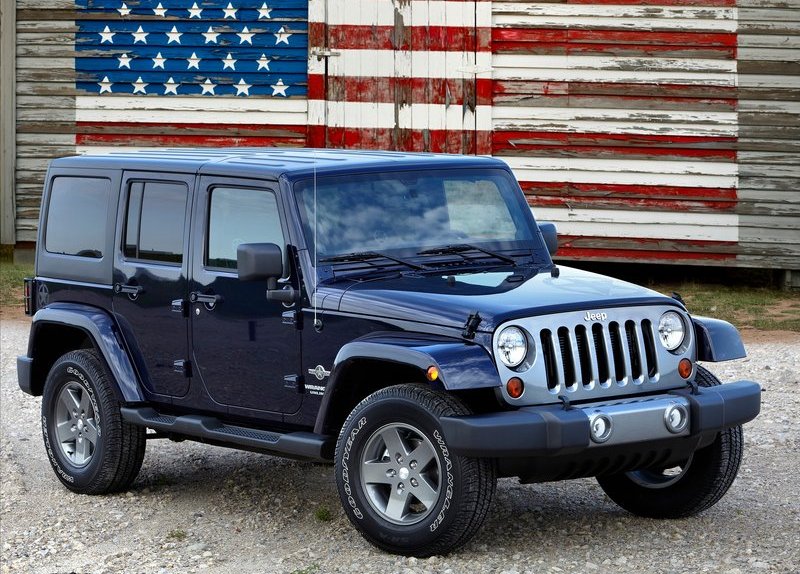
Fiat-Chrysler’s position can be considered good. They offer the old Jeep Cherokee/Liberty and the famous Jeep Wrangler. The first one will be soon replaced by an all-new model in order to gain some reputation of the good Jeep Grand Cherokee but in a smaller size. Meanwhile the Wrangler is one of the most popular and appreciated SUV of the segment. In 2011 it was the third best-selling D SUV in USA and Canada, no matter it still uses an old platform. It allowed the group to reach 17.5% of the segment in USA and 11.3% in Canada*. But these two Jeeps are also popular in Greece (15%), Venezuela (46%), or in some countries of the Middle East. At the end Jeep must work on a better Cherokee and think of an excellent successor for the Wrangler, which could be considered another icon such as the Fiat 500.

‘D-SUV’ segment offer in Europe, America and Australasia


Click here to see ‘E/F-SUV’ Segment

Click here to see ‘C-SUV’ Segment

*FGW data

VW Up! threatens Fiat Panda’s leadership

If June was a bad month for the couple Fiat Panda-500, July was even worse. If it is considered sales figures of Austria, Czech Republic, Germany, Denmark, Spain, France, Greece, Italy, Ireland, Netherlands, Poland, Romania, Slovakia, Slovenia, Sweden and Switzerland, during las month 13.272 Pandas were sold, just 51 units above the sum of Up!, Citigo and Mii. It is the first time the German trio reaches that great result and now it is not only more popular than Fiat 500 but it seems it will beat Fiat Panda and maybe dethrone it in the next months. It is important to mention that in this monthly analysis it is being considered 3 models with 3 and 5 door versions for the VW/Skoda/Seat against one single model of Fiat 500 with only 3 doors option and the two latest generations of Fiat Panda, only available with 5 door body.  Anyway, the Panda has been always Europe’s best selling A-Segment car but it has had a tough time not only in its native Italy, where it dropped 17.5% compared to June figures, but also in all other countries except for Romania and Slovakia. The small Fiat fell 25% compared to June figures, much more than Fiat 500, down 16%, while the Germans are up 7%. The 500 is down everywhere in Europe except for Austria, up 17%, Denmark, up 3%, and Poland, up 68%.

In July the Up!/Citigo/Mii are more popular in Austria, Czech Rep., Germany, Denmark, Spain, Ireland, Netherlands, Romania, Slovakia, Slovenia, Sweden and Switzerland. They had a record sales in Austria, Germany, Denmark, Spain, Greece, Ireland, Netherlands, Romania, Slovakia and Switzerland. The situation for Fiat is really bad as two important things must be analyzed: first of all, it was July, a historical bad month for car sales everywhere in Europe, and Fiat models dropped but the VWs were up. And the second one is that the product with the deepest fall was the Panda, an all-new product on sale since January. Year-to-date records show that the Panda commands with a big difference but the 500 will be soon replaced as the second best selling A-Segment car by the German trio. If Italian car market continues to fall, while the Up! keeps rising in Germany, Fiat will not only lose and important market share in A-segment but will be in serious trouble in the next months. Of course the UK, not included due to lack of data, is an important market for the Fiat 500.

Green cells indicate growth compared to June figures. Red ones indicate fall. Source: http://www.bestsellingcarsblog.net

Click here to see Fiat Panda/500 vs. VW Up! August 2012

Click here to see Fiat Panda/500 vs. VW Up! June 2012

Learning about cars: the ‘C-SUV’ Segment

Jeep Compass. In 2011 was number 7 in the ranking of best selling C-SUV. Will be replaced soon by a model shared with Fiat. Photo by http://www.netcarshow.com

It’s time for larger SUVs. After the smallest ones the ‘C’ SUVs are much more popular and therefore there are more options worldwide. Some of them are based on ‘C’ segment cars, like the BMW X1 and 1 Series. As in the ‘B-SUV’ segment, there are a lot of kinds, some of them luxury and some larger or shorter. At the end, these SUVs are world’s most popular because they have the right size and are not expensive as larger ones. That’s why most of all car makers have developed their own SUV in this segment, well in some markets people are changing their regular passenger cars for a ‘C-SUV’. Last year around 3.7 million units were sold worldwide and this time is not China but the USA the largest market. Americans love them: almost 1.1 million units were sold no matter the high prices of oil and gas. China follows with 830.000 cars, and then comes Germany 220.000, Canada, 175.000, and the UK with 135.000 units. By makers more or less all of them have a model in this segment. Japanese are very strong with Toyota, Nissan, Honda and Mazda. But they are not alone. Germans have also developed their cars but more expensive. French have some offer but all of it is based on Asian models.  Americans began to produced C-SUVs when they saw they were so popular and people wanted them. And of course Koreans have their offer with very competitive prices and products.

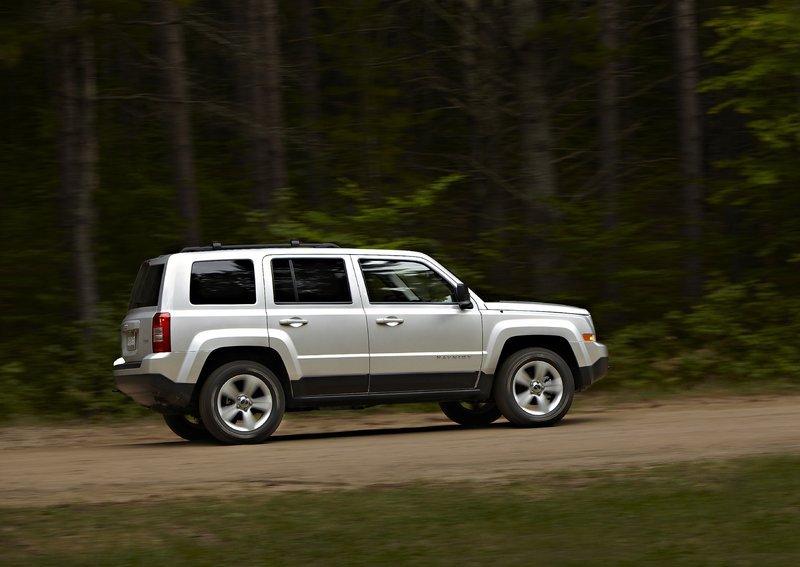
The Jeep Patriot is basically the same Compass but with more classic design. It is a bit more popular than the Compass. Photo by http://www.netcarshow.com

Fiat Group has never had a car in this segment. Only after the acquisition of Chrysler, there are 2 models offered: the Jeep Compass and Patriot. They were developed to compete with Toyota Rav4, Honda CR-V and some other Asians but they are not popular. Even though the first one got a deep facelift some months ago but has not been able to rise its sales figures. In 2011 almost 70.000 Compass and 80.000 Patriot were sold world-wide. The US market represented the largest market by far: 48.000 Compass and 55.000 Patriot. But the group wants more because they see this is an important segment with high growth rates in developing countries. That’s why Fiat is working on a new car to be presented in 2013 and will be a SUV under Jeep and Fiat brands. Here there are the ‘C-SUV’ cars:

C-SUV options around the world


Click here to see ‘D-SUV’ Segment

Click here to see ‘B-SUV’ Segment