Brazil and Argentina September results. Any problems?

Fiat Uno is Brazil’s second best-selling car. Photo by netcarshow.com

September 2012 was a good and bad month for car registrations in Brazil and Argentina. Fiat Automoveis in Brazil was up 15.5% in a market down 5.2%. Meanwhile in Argentina things are not that good, as Fiat was down a massive 44.3%, much more than total market’s, down 24%. With a big market share in both markets, Fiat Auto depends a lot on them as European sales plunge and there is no solution yet. It is why it was so shocking not to see any all-new model in Sao Paulo last week, which is the most important car show in the region. Brazil and Argentina make part of MERCOSUR, one of world’s largest union trades, and their industry is more or less the same, sharing a lot of models and production lines.

September 2012 Brazil, Fiat’s top 3 best-selling models against its main rivals from VW. Source: bestsellingcarsblog.com, carsitaly.net

Fiat sold 54.800 passenger cars in Brazil last month, less than previous month (in which Fiat plus all its LCV brands sold a record of 100.000 cars). However, due to a tiny fall of the whole market, Fiat increased its market share and had its best so far, 25.57%. The reason for this is the great performance of new Palio, up 91%, which after one year of its official launch, seems to finally take off, no matter the difficult times it will face in the next months with the arrival of the updated VW Gol and new Hyundai HB20 and Chevrolet Onix, all presented in Sao Paulo. The new Siena did also great, up 64%, and it was the best-selling small sedan during that month, beating Chevrolet Corsa Sedan and VW Voyage. The popular Uno stays back, down 9%, as its main competitor, the VW Fox, grows 42%. It all seems that the Uno reached its top of its commercial life, while the Palio and Siena still have a bit way to grow. What’s missing is the arrival of new generation Strada, still strong but soon will get old.
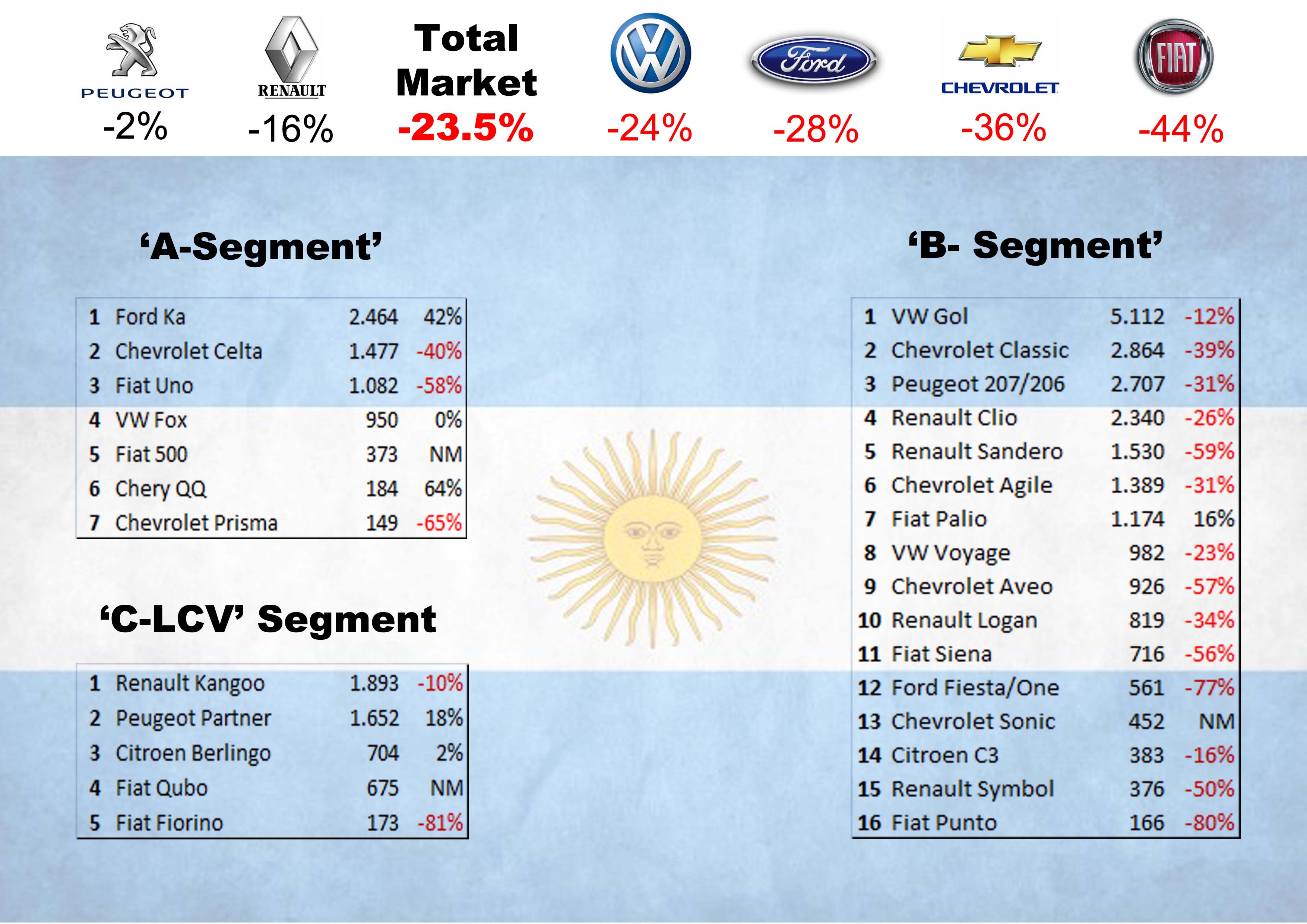
Argentina’s car sales September 2012. Notice that new Fiat Palio is the only model from ‘B-Segment’ to increase its sales figures. Very bad for the Uno, Punto and Fiorino. The coming facelifted Punto and new Doblo will help to boost Fiat registrations. Source: bestsellingcarsblog.com, Autoblog Español

In Argentina Fiat brand sold a bit more than 5 thousand cars and contrary to what happened in Brazil, it got its worst market share so far this year, 7.97%. September was the fourth consecutive month of sales decrease for the company, in a market that shows signals of depletion. The boom the car industry had last year seems to finish this year as some economic problems affect buyers decision. Only the new Palio has good performance, up 16%. The Siena is down an alarming 56%, waiting for the new generation to come in the next weeks. The bad performance of the Siena (historically Argentina’s best-seller Fiat) plus the Uno down 57%, can explain the reason of the fall of the brand. These falls are explained by lower general demand but also because of some problems of stock as customs in the border with Brazil had some bureaucratic problems. Nevertheless Fiat has just presented the new Siena (starting at $17.300) and from some weeks ago it offers the Bravo, imported directly from Italy, starting at $29.900 US dollars. It is also working on more launches, with the new Punto, coming from Brazil, or the Idea. Even the Doblo, the passenger LCV made in Turkey, is part of the new cars Fiat will present soon, as this kind of vehicles is some how popular and Fiat has an important market share.

The Grand Siena was already presented in Argentina. It will be positioned between the regular Siena, locally produced, and the Linea. Photo by Carsale

 

Click here to see Brazil October 2012 Results

Venezuela: a rebadged Fiat could see the light

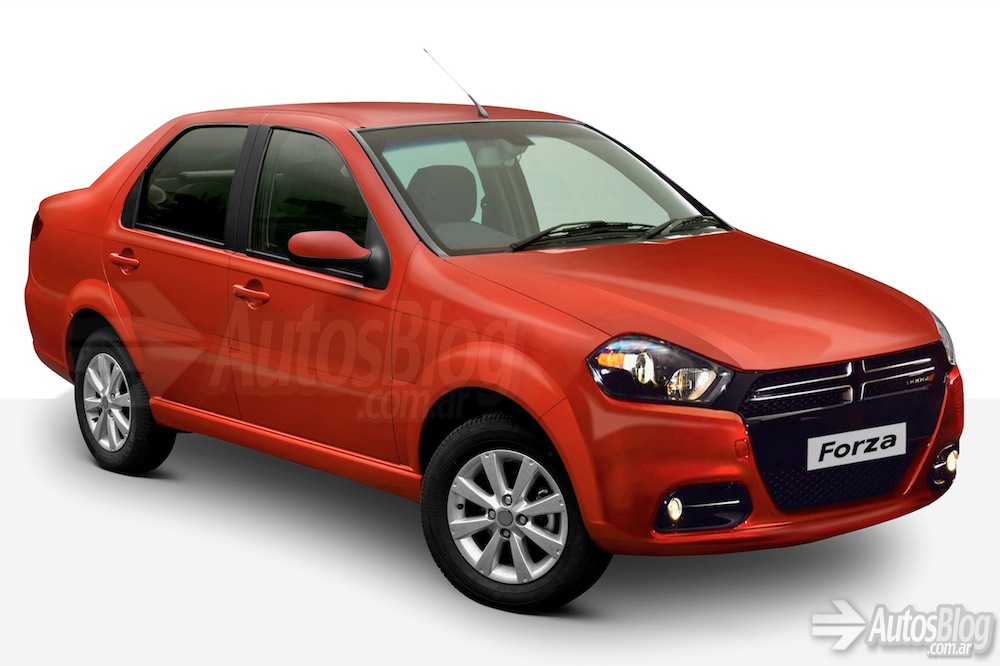
This is how the rebadged Fiat Siena could look in Venezuela under Dodge brand. Illustration by Autosblog.com.ar

According to Chrysler executives in Venezuela, the company is getting prepared for a ‘new’ B-Segment car. Human Resources director for Chrysler Venezuela, Mr. Wilfredo Trejo, said the company has already invested $47 million to adapt their factory to the production of the new model. The car, that may be called Dodge Forza, will be available from the beginning of 2013 but is not clear if it will be available outside Venezuela. Based on information from that country and Argentina, the Forza will be based completely in the first generation Fiat Siena, still available in South America. Both brands, Chrysler and Fiat, have always had an important market share in Venezuela. Last year Chrysler 9.245 passenger cars, from which 4.692 were Jeep Grand Cherokee, 2.926 Jeep Cherokee and 1.807 Dodge Caliber. Fiat, which used to be one of top 3 best-selling car makers, sold 1.281 Siena and 318 Palio*. The brand was severely affected by restrictions on imports, but the Argentinean Siena was selected as one of the models to be directly imported by the government. Chrysler has an assembly plant in Valencia and makes the Grand Cherokee, Cherokee, and Caliber, while Fiat closed its plant in late 1990’s as Brazilian product was more competitive. In 2011 more than 105.000 passenger cars were sold in Venezuela, from which 37% were ‘B-Segment’ cars, 21,5% ‘C-Segment’ and 19% were all types of pickups. The market reached its top in 2007 when more than 492.000 new cars were sold.

Source: Guia Motor Venezuela

* FGW Data basis

Argentina: the new market for Italian Fiat Bravo

The beauty Fiat Bravo is getting ready for a new conquest. Although it has been on sale since 2007, the car has never had good sales figures not even in Italy. The lack of a 3 door version, Station wagon and more engine options, has made of it a complete flop for Fiat. Nowadays, tough times in Europe indicate that the model will soon disappear so European version of Fiat Viaggio will arrive. And sales figures confirm it: in 2010, 43.116 units were sold in Europe and one year later only 31.673*. During the first 6 months of 2012, only 9.611 units were sold. It means the C-Segment car from Fiat is losing market share as no other. Mainly because of the success of the Alfa Giulietta in Italy, and the good sales figures of Kia Cee’d/Hyundai i30 in Europe. This is certainly really bad news for Fiat as C-Segment is Europe’s second largest one and the car is not old at all. Besides it means less production levels for its plan of Cassino, that produces the trio Bravo/Giulietta/Delta.

Italian Fiat Bravo is expected to hit Argentinean market late 2012

One of the solutions for this over capacity problem is to open Italian factories to international markets, or those markets located outside Europe. Marchionne has said repeatedly that future of Italian production depends on its ability to export far away from European Union. But it will take a while to reach that goal as Europe is not really open to global markets and European products are not really competitive when they are exported abroad. Anyway they just began to do it and the Bravo is the chosen one. The place: Argentina, an emerging market that has reached sales figures above Spain  or Indonesia, and gets close to Australian market numbers. Almost 858.000 cars were sold over there in 2011, up a massive 29%. In 2012 things seem to stabilize but the country is now a big market for car sales and production. Fiat has one factory in Cordoba, where it produces the B-Segment sedan Siena for local consumption but also for exports to Brazil. It is one of the biggest of that country and the brand is well-known among buyers. Though it could be considered a closed market in terms of imports, Argentina is becoming not only big but also difficult when it is about competition with local manufacturers such as VW (where the Amarok was first produced), Renault and GM. Last year almost 42% of total sales were B-Segment cars, a bit more than Brazil’s percentage, while A-Segment is much smaller than Brazil’s. Only 9.5% of total sales were that kind of cars. It means the position of Fiat in Argentina is not as comfortable as it is in Brazil. It can be seen in its market share, around 10%-11%, far away from the 22%-23% it has in Brazil. Fiat had 33% of A-Segment in Argentina during 2011, 12% in B-Segment and only 1% of C-Segment***.

Current Fiat Bravo detail

It is why Fiat is now preparing the launch of Italian Fiat Bravo in Argentina. According to the latest official video of Fiat Argentina, the car will be available in late 2012 with two engines options: 1.4 Turbo 16V MultiAir with 140 hp and 1.6 Turbo MultiJet diesel with 120 hp. Among the features are the Stop/Start system, Xenon headlights, ABD, EBD, leather seats, Blue&Me system, double sunroof Skydome, parking sensors, and others. Prices are not yet published but it is expected that the car will be as expensive as its main competitors, Ford Focus, Renault Megane and Peugeot 308. So, as European sales of Bravo drop, it can find another market where it could have an interesting position among Compact cars in a market that is growing a lot. Good for Cassino plant.

*www.carsitaly.net

**bestsellingcarsblog.com

*** FGW data

Trivia: good news from Colombia

Colitalia is the official distributor of Fiat and Alfa Romeo in Colombia since 2009

It is just a small number coming from a small but dynamic market, Colombia. But in these days of bad news coming from Europe, it is good to know that Fiat cars are doing quite well in a country where competition is getting really hard and the image of Italian cars is not the best. Colombian car market has become one of the most dynamic ones thanks to several factors. First of all Colombia is now facing a healthy economic period that has allowed a larger part of the population to afford its first car. Another important fact to be considered is the devaluation of Colombian Peso, the currency. Now imported cars, 60% of total sales, are no longer as expensive as they were some years ago. For example, 4 years ago a VW Jetta was available starting at US$50.000 and now people can buy paying only US$21.000. Besides current and last Colombian governments have decided to follow the Chilean and Peruvian example in terms of trade. Colombia is now a more open market to investment and free trade agreements. They have signed free trade agreements with Mexico, Chile, Peru, USA, Canada and now are coming the agreements with the European Union and South Korea. Doing so, Colombia is opening its car market to the arrival of cheap imported cars that will better compete with local made Chevrolet, Renault or Mazda. That is why Mexican cars like the Nissan Sentra, Versa, March, or VW Jetta, Dodge Journey, Ford Fiesta, or Korenas such as the Hyundai i25 and i35, Kia Rio, Sportage or Cerato, have become all so popular in this South American country. Last year a record of 325.000 cars were sold over there, up 28%, and this year is expected the same number, allowing Colombia to become the fourth largest of Latin America.

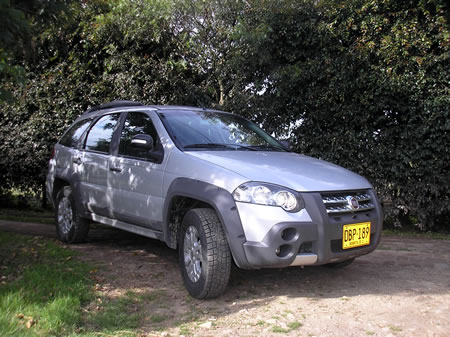
The Palio Adventure Locker is one of Fiat best selling cars in Colombia. It comes from Brazil and offers a good mix of offroad car with the advantage of not being 4WD so it does not pay a lot of taxes.

In that context Fiat-Chrysler is doing an interesting job. First of all is important to mention that Fiat brand has had a troubled history since it was established some decades ago. In the late 70’s Fiat used to assembly their 147, Mirafiori and some more in their plant in Bogota. The cars were really popular but in the 80’s Mazda bought the plant and the Fiat production moved to Venezuela. After that the representation of the brand has been scattered and has damaged the image of the brand among Colombian users. Anyway in 2009 Colitalia Autos, an Italian-Venezuelan company bought the rights of the brand to Autogermana, BMW dealer, and began the best service ever. After some years of hard work looking to regain the trust of Colombians, Fiat is now increasing its presence all over the country in order to catch a part of this important market. They sell the new Uno, Palio, Siena, Strada, Idea, Punto, all Adventures, all coming from Brazil, and the small 500, imported from Mexico. Colitalia is also the official dealer of Alfa Romeo available in Colombia since 2010. The good news is that Fiat brand is up a massive 30% in January-July 2012 thanks to new dealerships all over the country and much better products with interesting prices. They have sold 978 units, from which the Fiat Strada, Palio and Palio Adventure are the most popular. The Fiat 500 is also having a good time in Colombia due to the fact that it does not pay any import taxes as it comes from Mexico. When it was introduced for the first time, in 2009, the Polish 500 started at US$36.000 and today Colombians can buy the Mexican version for only US$20.500. The good result of sales registrations is even better taking into account that Colombian car market has stopped its growth, and is up only 1%, as a response to a decrease of general consumption of Colombians. Fiat can play an interesting role in Colombian market if Colombian economy opens its barriers to Brazilian products and at the same time boost the Mexican products.

The presence of Fiat has never been stable. Only since 2009 when Colitalia got the official distribution of the brand, Colombians began to believe again. There are tons of work yet. Source: Revista Motor

But Colombia is not the only country where Fiat is doing good. In Mexico, after the launch of the local made 500, the sales of the brand have risen 133% in January-July 2012. Certainly Mexicans begin to love this pretty car and the fact that the brand is now better represented by Chrysler, the fourth largest of the country. 2741 cars have been sold over there. All these sales figures, though they are still small numbers, are good news for a better start to open more markets for Fiat in Latin America, where it is really dependant in only 2 countries, Brazil and Argentina. Mexico, Colombia, Peru and Chile are healthy markets where the presence of the group must be increased and improved.

The Mexican Fiat 500 grabs Latinamerica

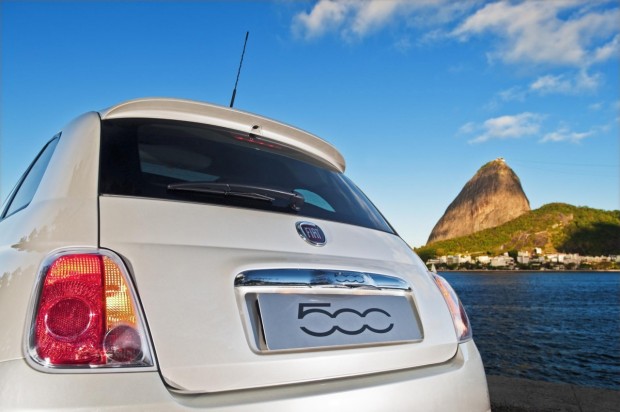
Mexican Fiat 500 in Brazil starting at R$39.900 (US$19.700). Photo by carplace.virgula.uol.com.br

When Sergio Marchionne chose Chrysler factory in Toluca, Mexico, to produce the small 500 for the return of the brand to American market, he was not only thinking of labor costs. Certainly Mexico is a good place to produce small cars due to less expensive labor costs that allows car makers to have more profits per car produced (normally small cars have less profit). With less production costs then it would be easier to positionate the Cinquecento in the complicated American market, as the small Italian with interesting prices. Mexico is part of NAFTA, North America’s Free Trade Agreement, with the US and Canada, and therefore all products produced within these 3 countries can be exported to their partners without paying import taxes. But besides America and Canada, Marchionne’s mind was also heading to the south. Latinamerican market has become in one of world’s most dynamic, as it has not been affected by financial crisis of last 3 years, and sales continue to grow due to good economic moment and excellent perspectives for the coming years. Brazil, Argentina, Colombia, Chile and Peru are some good examples of amazing growth of car sales. In 2011 the whole region sold 6.466.328 units (included Mexico, Central America and the Caribbean), up 7% compared to 2010, which means that 12.3 new cars were sold per 1000 inhabitants, still far from developed countries (USA, 40.7 and EU, 36.2). Nevertheless all car makers are investing in the region for coming years as a big part of the population will buy its first car.

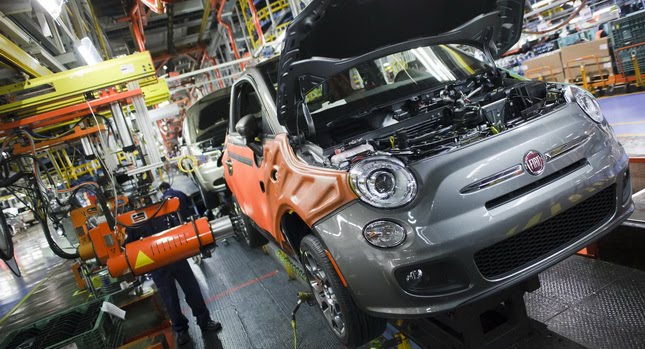
Fiat 500 production in Toluca, Mexico, from where it is exported to USA, Canada, Brazil, Argentina, Colombia and Chile, and soon China. Starting at MXN$199.900 (US$14.000)

Fiat-Chrysler has an important presence in this region. They have factories in Brazil, Argentina, Venezuela and Mexico and they sell everywhere. And Mexico has become an interesting production pole because of its economic agreements with other Latinamerican countries. It is while Chile and Peru the country with more free trade agreements signed. But unlike Chile and Peru, Mexico is a big car producer. In the region it has free trade agreements with MERCOSUR (Brazil, Argentina, Uruguay and Paraguay), Colombia and Chile, and it means they can export their cars paying zero taxes. It allows Fiat-Chrysler to export its Mexican cars to those countries with very competitive prices. One of the latest cars to make useful of this advantage is the Fiat 500. Marchionne was also thinking of this great opportunity because Mexico is the only country that can sell everywhere in the Americas with vert high quality standards and very competitive prices. That is why the Cinquecento is now grabing Brazil, Argentina and Colombia after the bad results that had the European version sold with vert high prices. Now Brazilians can buy it stating at US$19.700, while the car is available in Argentina starting at US$17.600, and US$20.000 in Colombia. In all markets is available with 1.4 8v 85hp or 1.4 16v 105hp. This good price can be seen in total sales. In the first 4 months of 2012, 6.764 units have been delivered to Brazil and 1.135 to Argentina. Eventhough are not big numbers as they are in Italy or in the US, the results of the small Fiat must be analyzed carefully from other point of view.

First of all, Latinamerican market is mostly composed of small and economic cars. The 500 is small but has never been a cheap car, not even in Europe. In Latinamerica this car is positionated as the cheaper competitor of Mini Cooper. It means it is sold as a mini exclusive car. This kind of clients are not really abundant. Secondly, Fiat’s image outside MERCOSUR countries is really bad. That is why selling a Fiat in Colombia, Chile or Peru can become a hard task to accomplish (in 2011 Fiat-Chrysler’s market share was 3.8% in Chile and 1% in Colombia, most of it thanks to Dodge models). And finally, the results obtained by the Mexican model must be compared to the Polish one. One year ago, the European version was not even in the top 100 best selling cars in Brazil, Argentina or Colombia. Year to date results show that Fiat 500 occupies place number 35 among best selling cars in Brazil (# 103 in 2011), and number 56 in Argetina (# 122 in 2011). In Colombia there is no official data but it has been known that the small Cinquino has been a success thanks to its low prices. Though there is not data for sales by model, the arrival of Cinquecento in Mexico has allowed Fiat brand to increase its sales up 112% in Jan-Apr/12. It all means that slowly the Fiat 500 is grabbing Latinamerican buyers as it has done in the other markets where it has been introduced.